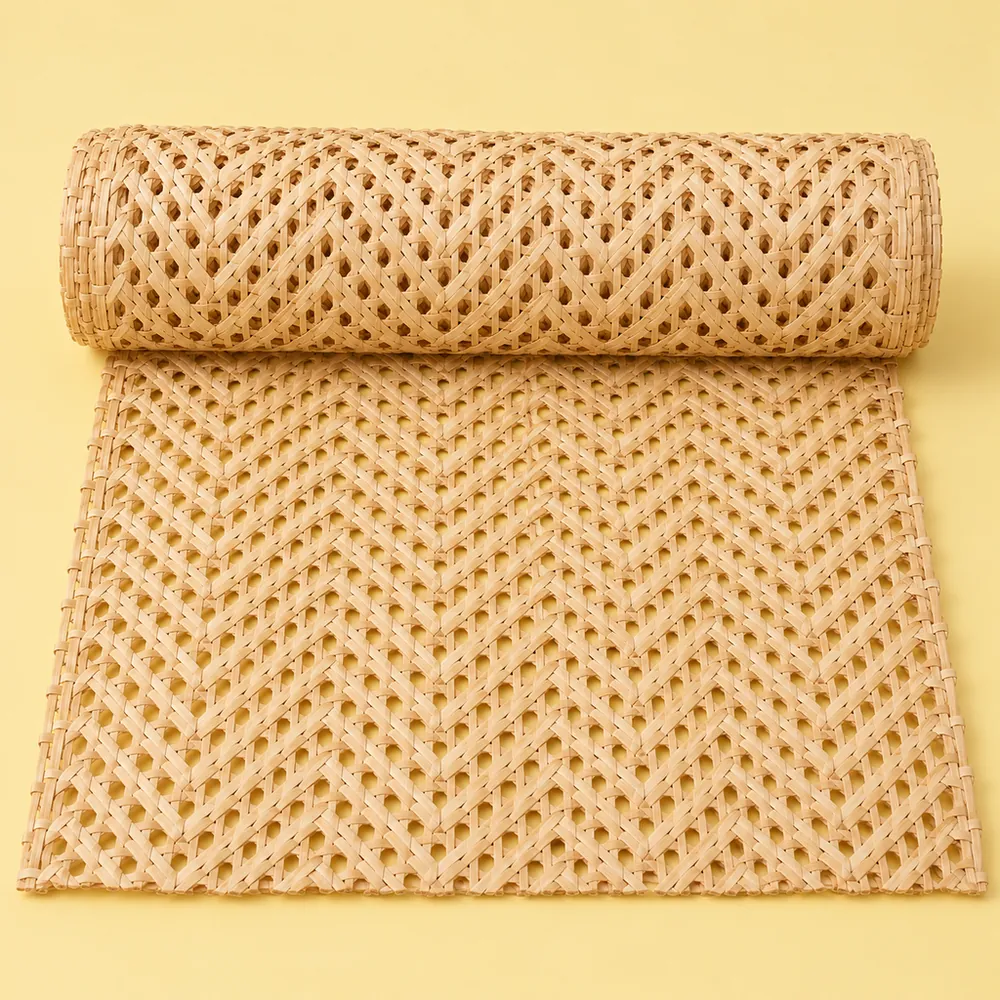
Photos illustrate the product type.
Diamond Weave Cane Webbing (V Pattern), Natural Rattan, 14 to 48 in
Diamond (V) weave cane webbing in natural rattan, rows of chevrons. Rolls 14 to 24 in wide and a 4 x 8 ft sheet for headboards, walls and doors.
Every roll is measured before it ships. Natural material: color and grain vary. Soak about 30 minutes before use.
In this weave the natural rattan strands run on the diagonal and form rows of repeating V shapes, stacked into a diamond or chevron pattern. It is a decorative weave: bolder than classic open weave and with more movement than square weave, so it suits surfaces people look at rather than sit on.
Good places for it:
- Headboards and wall panels, where the chevrons can run from edge to edge
- Ceiling panels and folding room screens
- Cabinet doors and the front of a sideboard
The 48 in wide piece is a full 4 x 8 ft sheet, the size of a sheet of plywood. Use it when one surface has to be covered without a seam, such as a large headboard, a tall screen or a ceiling bay. The narrower rolls, 14, 16 and 24 in wide, are easier to handle for doors and smaller panels.
To install, soak the cane about 30 minutes in warm water, keep the shiny side out, and either glue and staple it behind a frame or press it into a routed groove and lock it with reed spline. It tightens as it dries. A full sheet is large and floppy when wet, so have a second person hold it while you staple.
The V pattern has a direction. Before you cut, decide whether the points should face up, down or sideways, and draw an arrow on the back of every piece so a set of doors or panels all point the same way. If two pieces meet at a joint, line up a row of Vs across the joint before the first staple goes in. Matching pieces should all come off the same roll; color shifts a little between rolls of natural cane.
How to choose
Sizes: 14 in x 3.3 or 5 ft, 16 in x 5 or 10 ft, 24 in x 10 ft, and a 48 in x 8 ft sheet. Measure each opening and allow at least 1 in all round for staples, or at least 2 in each way if the panel sits in a spline groove. Go for the narrowest roll that still spans the short side of the piece.
Example: two doors with 12 x 26 in openings need two 14 x 28 in pieces, 56 in end to end, which fits the 16 in x 5 ft roll. Anything wider than 22 in in both directions, such as a headboard, belongs on the 48 in sheet, which covers an opening up to 46 x 94 in in one piece.
Questions
Is diamond weave the same as V weave or chevron cane?
Yes. All three names describe strands set on the diagonal to form repeating rows of Vs.
Can I use it on a chair seat?
It is a decorative weave meant for panels, doors, screens and headboards. For a seat that gets sat on every day, classic open weave is the traditional choice.
How do I put a large sheet on a wall or ceiling?
Build a simple wood frame or a grid of battens, then soak the sheet and glue and staple it to the frame as you would a door. Trim strips or molding hide the staples along the edges.
Will the pattern line up across two pieces?
Only if you plan it. Cut both pieces from the same roll, keep the arrows on the back pointing the same way, and match a row of Vs along the joint before stapling.
You may also need
-
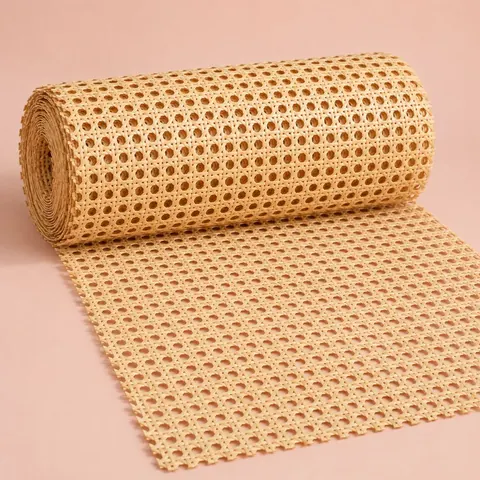
Cane Webbing Roll, Open Weave Natural Rattan, 14 to 36 in Wide
Natural rattan cane webbing in the classic open weave, on rolls 14 to 36 in wide, for chair seats, cabinet doors, headboards and screens.
From $18.99 · 14 options
-
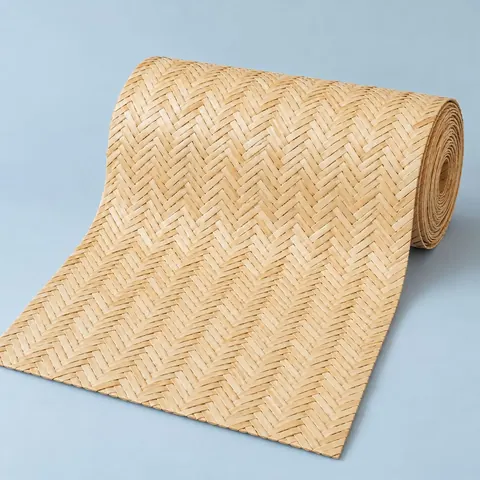
Herringbone Cane Webbing, Closed Weave Natural Rattan, 24 in Wide
Closed herringbone cane webbing in natural rattan, 24 in wide with no open holes. Hides what is behind cabinet doors, drawer fronts and wall panels.
From $32.99 · 3 options
-

Wood Glue for Caning, White PVA, 4 fl oz Bottle with Narrow Tip
White PVA wood glue in a 4 fl oz squeeze bottle with a narrow tip that lays a clean bead into a spline groove. Dries clear; wipes up with a damp cloth.
$6.99