Materials
Choosing a cane webbing weave: open, square, herringbone, more
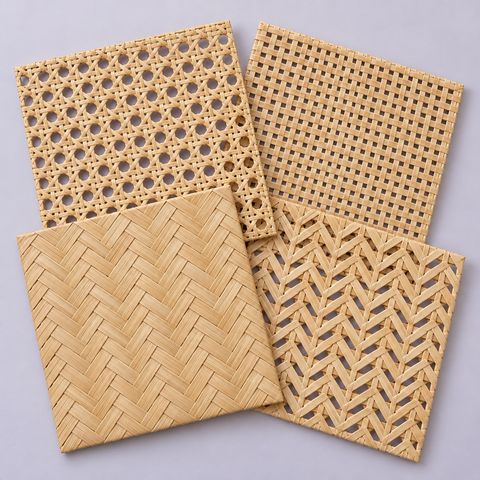
Open, square, herringbone, diamond, semi-bleached, walnut-tone and PE cane webbing compared: the look, light and privacy, and where each works best.
Updated
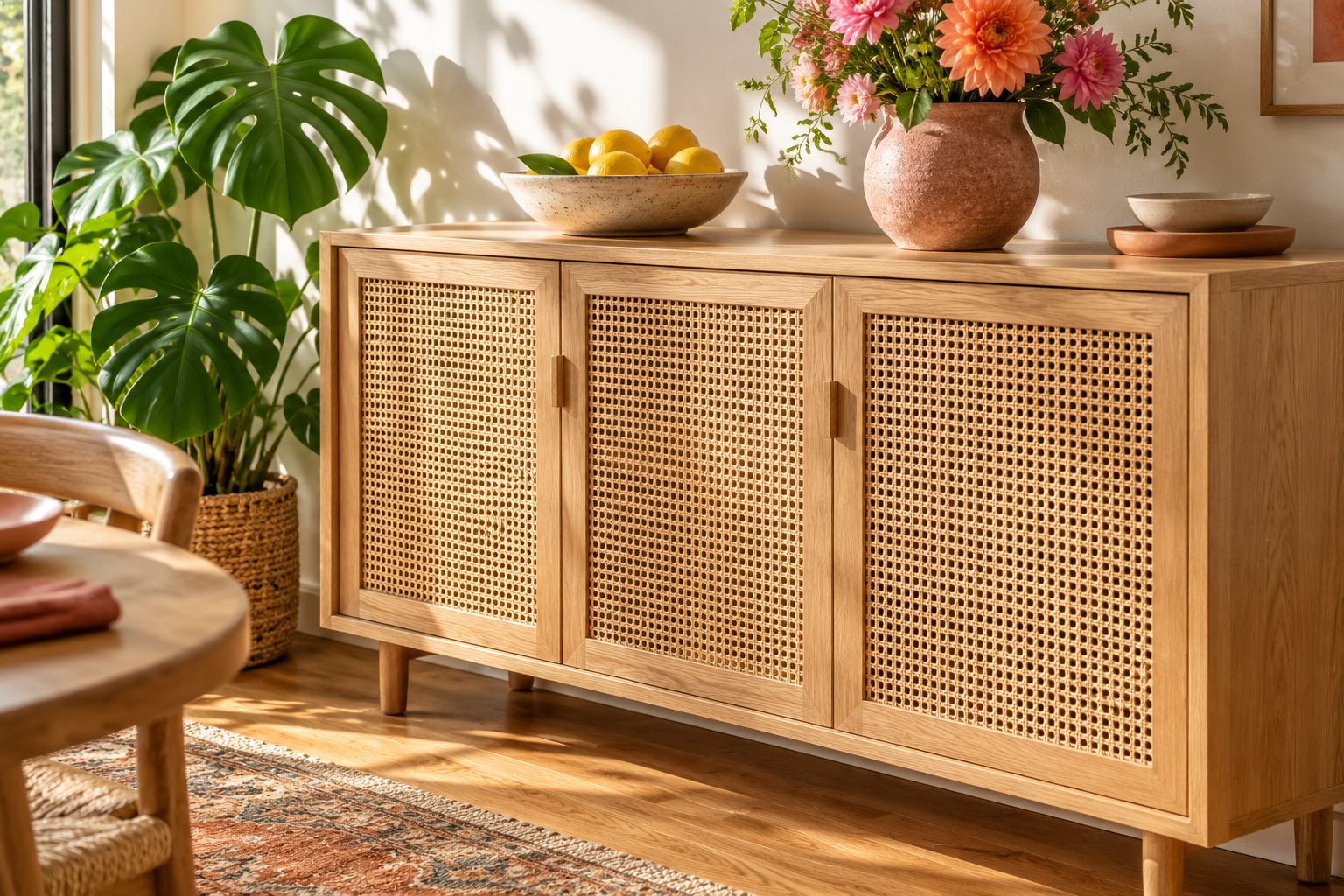
All cane webbing is installed the same basic way, but the weave changes almost everything else: how the piece looks, how much light and view pass through it, and which projects it suits. Here is how the options compare, and how to pick.
The weaves at a glance
| Weave | Pattern | See-through | Usually installed | Looks best on | Widths |
|---|---|---|---|---|---|
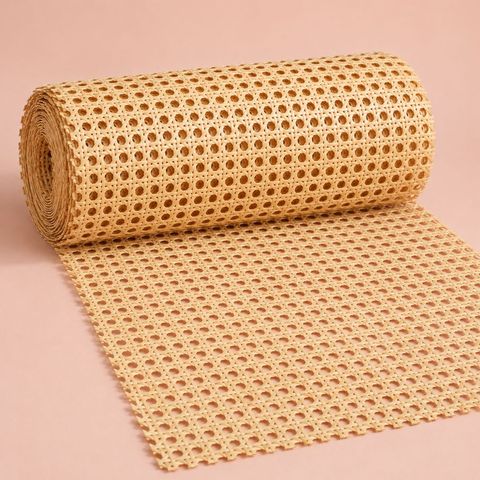
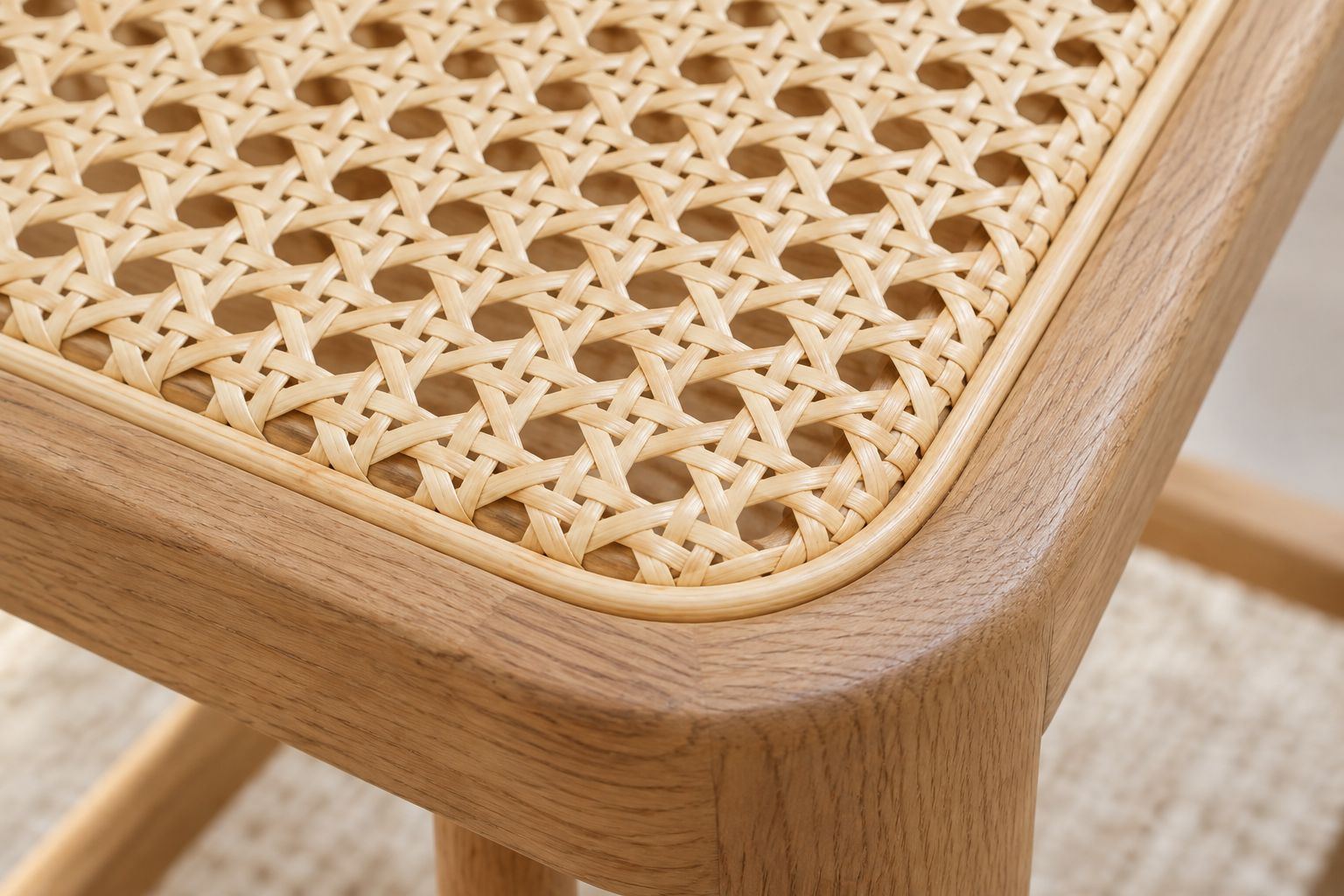
| Open | Strands in four directions, small octagonal holes | Open: light passes and shapes behind show | Groove and spline, or glued and stapled | Chair seats and backs, cabinet doors, headboards | 14, 18, 24, 36 in |
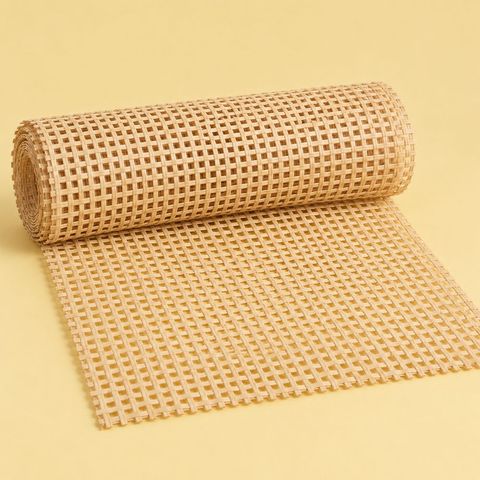
| Square (radio) | Strands at right angles, small square holes | Open, in an even grid | Groove and spline, or glued and stapled | Modern cabinet doors, sideboards, wall panels | 14, 18, 24 in |
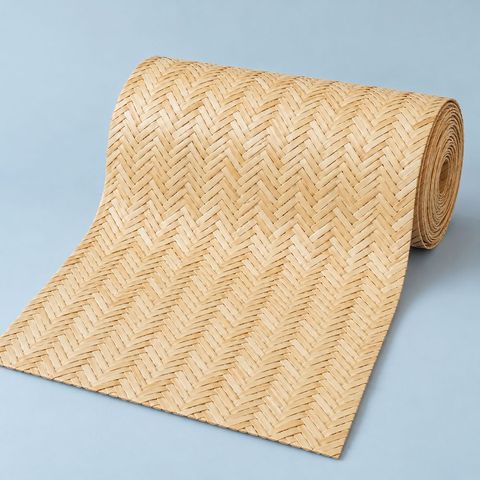
| Herringbone | Closed twill, no holes | Closed: hides what is behind | Glued and stapled behind flat frames | Cabinet doors, drawer fronts, wall panels | 24 in |
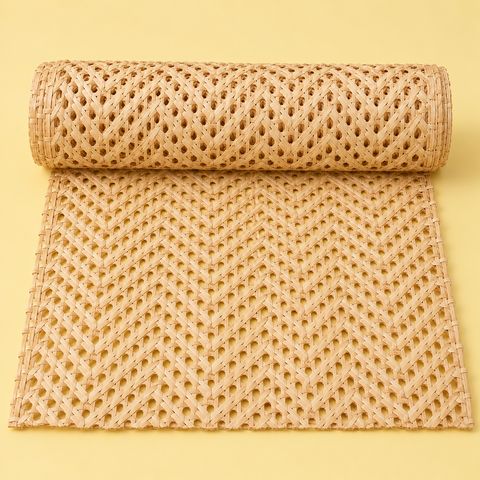
| Diamond (V) | Repeating V or chevron | Varies; check a sample against the light | Glued and stapled, or groove and spline | Headboards, wall panels, ceilings, screens | 14, 16, 24 in, and a 48 in wide sheet |
Then there are color and material choices:
| Option | What it is | Best with | Sizes |
|---|---|---|---|
| Semi-bleached | Open weave, lightly bleached to a paler cream-blond | Light oak, white paint, Scandinavian style | 18 or 24 in x 4 ft |
| Walnut-tone | Square weave stained deep walnut brown | Dark wood, mid-century pieces, moody rooms | 18 in x 3.3 or 5 ft |
| PE open weave | Polyethylene strands in the open weave pattern | Patios, bathrooms, boats, RVs, rentals | 16 x 40, 16 x 72, 24 x 60 in |
| PE square weave | Polyethylene square weave | Outdoor cabinets, patio screens, vanities | 24 x 60 in |
Open weave
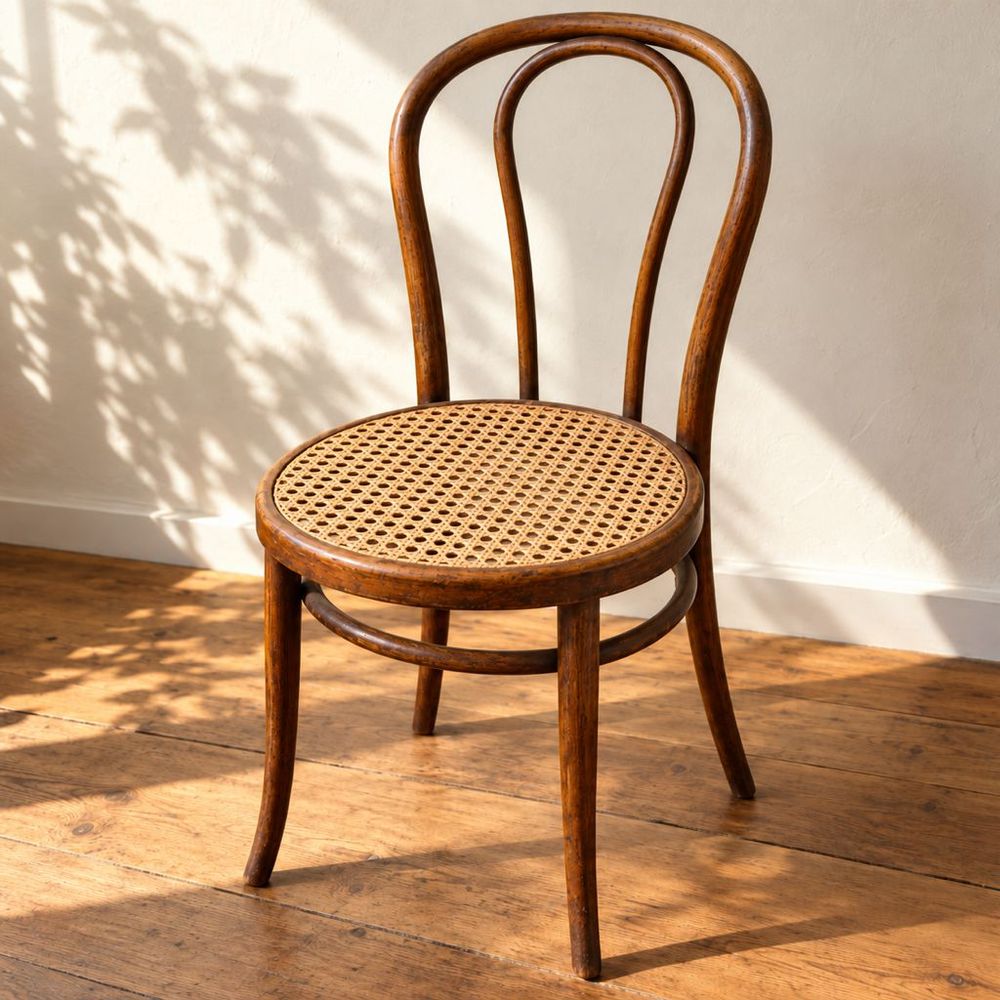
This is the weave most people picture when they hear “cane.” The strands run in four directions and leave small octagonal holes, the same look as a traditional hand-caned seat. It is the natural choice for restoring chair seats and backs, and it is just as good on cabinet doors and headboards.
Light passes through easily. Behind a cabinet door you will see the outline of what is inside, though not the detail. If you love the open look but want to hide clutter, staple a light fabric behind the cane.
The undyed cane is a honey-blond color. Because it is a natural material, the shade and grain vary from roll to roll.
Square weave (radio weave)
Square weave crosses the strands at right angles and leaves a grid of small square holes. It reads more graphic and modern than open weave, which makes it popular on cabinet doors, sideboards and wall panels. It installs exactly like open weave, so it also works in a grooved chair seat if you want a cleaner, more modern look.
Herringbone
Herringbone is a closed twill weave with no open holes. It is denser and more opaque than open weave, and the only closed weave in our range, so it is the one to pick when a cabinet door must hide what is behind it: a pantry, a bar cabinet, a cupboard of cables. It is usually glued and stapled behind flat frames such as cabinet doors, drawer fronts and wall panels, rather than pressed into chair seats.
The zigzag has a direction. Decide whether it should run up and down or side to side, and keep it the same on every door in a run.
Diamond (V) weave
Diamond weave forms a repeating V or chevron pattern. It is a decorative weave and works best where it can be seen as a surface: headboards, wall panels, ceilings, screens and statement cabinet doors. It comes in a 48 in wide sheet as well as narrower rolls, which helps with large panels.
Like herringbone, the pattern has a direction. Turning a piece 90 degrees turns the Vs on their side.
Semi-bleached cane
Semi-bleached cane is open weave that has been lightly bleached to a paler, more even cream-blond. Use it where honey-colored cane would look too warm: light oak, white or pale gray paint, Scandinavian furniture. Bleaching reduces the natural color variation but does not remove it, so expect some shading. It soaks and installs like any natural cane.
Walnut-tone cane
This square weave is stained a deep walnut brown for dark wood frames, mid-century furniture and darker rooms. Soaking can release a little stain, so rinse it once and let the water run clear before you install it near light upholstery or curtains.
PE (plastic) cane
PE cane webbing is woven from polyethylene strands that imitate rattan. It does not need soaking, it does not crack when bent dry, and it stands up to rain and humidity better than natural cane. It looks slightly more uniform and less glossy than the real thing.
Choose it for patio furniture, bathroom cabinets, boats, RVs and rentals. Install it by stapling and gluing behind a frame, or use spline in a groove as with natural cane. Since it is not soaked, it will not shrink tight as it dries, so pull it snug and even as you fix it. Our guide to outdoor PE cane vs natural cane goes into more detail.
Light and privacy: how to judge
- Herringbone is the only closed weave. It gives the most privacy and lets the least light through.
- Open, square and diamond all let light and some view through. How much depends on the pattern and the roll.
- Lighting inside a cabinet makes any open weave glow and shows the contents more clearly.
- The surest test is a sample held against a window or a lamp. The cane webbing sample pack has 12 x 12 in pieces of open, square, herringbone and diamond weave, enough to hold against your furniture and to try soaking and stapling.
Matching weave to project
| Project | Good choices | Notes |
|---|---|---|
| Chair seat or back with a groove | Open weave, natural or semi-bleached; square weave | Open weave matches most antique chairs |
| Chair or bench used outdoors | PE open weave | No soaking; handles rain |
| Kitchen cabinet doors | Open or square weave | Herringbone if you want to hide the contents |
| Pantry or utility doors | Herringbone | Closed weave |
| Bathroom vanity | PE open or PE square | Natural cane does not like steady moisture |
| Headboard | Open or diamond weave | Or a ready-made framed headboard panel |
| Wall panels and ceilings | Diamond, square or herringbone | Check pattern direction |
| Dark wood or mid-century pieces | Walnut-tone square weave | Rinse after soaking |
| Light oak or Scandinavian pieces | Semi-bleached open weave | Paler and more even |
Same care for every natural weave
Whichever natural weave you choose, soak it about 30 minutes in warm water before installing; it tightens as it dries. Put the shiny side out. PE cane goes in dry.
Once you have picked a weave, our guide to how much cane webbing you need helps you choose the roll size. Browse all cane webbing or synthetic cane webbing.