Collections
Natural cane webbing by the roll
Cane webbing, also called pressed cane or sheet cane, is natural rattan cane woven by machine into a continuous sheet. It is the seat on many bentwood and mid-century chairs, and the same material now fills cabinet doors, headboards, screens and wall panels.
It goes in one of two ways. On a chair seat or back with a routed groove, you soak the webbing, tap it into the groove and lock it in with reed spline; our seat replacement guide shows each step. On a flat frame such as a cabinet door, you glue and staple it to the back.
Choose the weave first. Open weave is the classic chair look. Square weave reads cleaner and more graphic. Herringbone is closed, so it hides what is behind a door, and diamond weave is a decorative pattern for walls and headboards. The weave guide compares them, and the sample pack lets you hold all four against your furniture.
Then the tone: honey-blond natural, a paler semi-bleached cane for light woods, or walnut-tone for dark frames. Last, the size. Measure the opening groove to groove, add at least 2 in each way, and pick a width and length that covers it. The guide to how much to order shows how to fit several pieces on one roll.
Every roll is measured before it ships. Rattan is a natural material, so color and grain vary a little from roll to roll.

- Measure the opening groove to groove and add at least 2 in each way.
- Soak natural webbing in warm water for about 30 minutes; it tightens as it dries.
- Put the shiny side up or facing out; the duller back goes underneath.
- Buy enough for the whole project at once, because color varies between rolls.
- Not sure about the weave? Start with the four-weave sample pack.
-
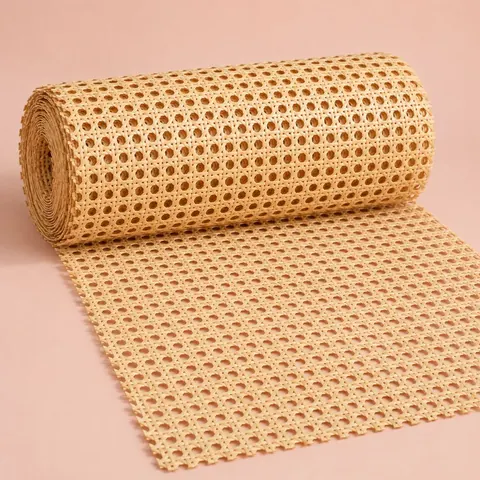
Cane Webbing Roll, Open Weave Natural Rattan, 14 to 36 in Wide
Natural rattan cane webbing in the classic open weave, on rolls 14 to 36 in wide, for chair seats, cabinet doors, headboards and screens.
From $18.99 · 14 options
-
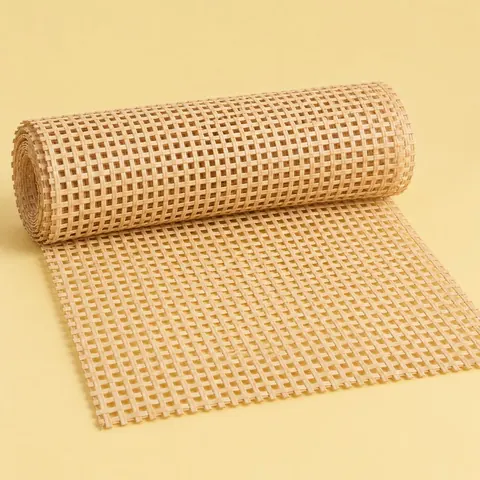
Square Cane Webbing Roll (Radio Weave), Natural Rattan, 14 to 24 in
Square weave cane webbing, also called radio weave: natural rattan strands crossed at right angles in a neat grid, for doors and wall panels.
From $19.99 · 5 options
-
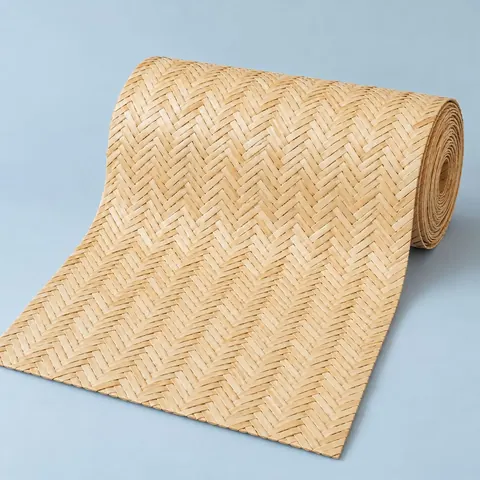
Herringbone Cane Webbing, Closed Weave Natural Rattan, 24 in Wide
Closed herringbone cane webbing in natural rattan, 24 in wide with no open holes. Hides what is behind cabinet doors, drawer fronts and wall panels.
From $32.99 · 3 options
-
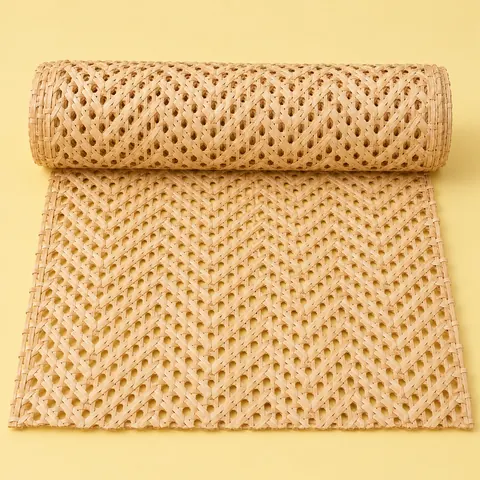
Diamond Weave Cane Webbing (V Pattern), Natural Rattan, 14 to 48 in
Diamond (V) weave cane webbing in natural rattan, rows of chevrons. Rolls 14 to 24 in wide and a 4 x 8 ft sheet for headboards, walls and doors.
From $19.99 · 6 options
-
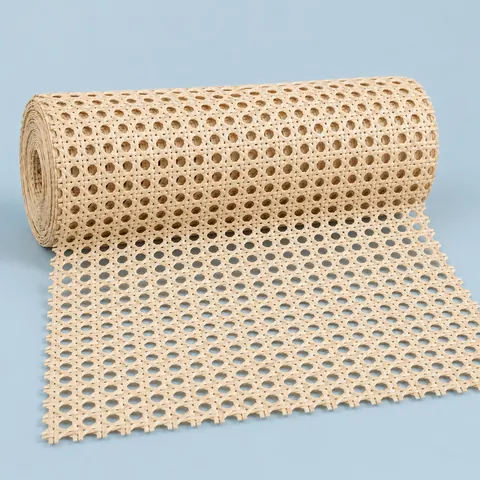
Semi-Bleached Cane Webbing, Light Open Weave Rattan, 18 or 24 in
Lightly bleached open weave cane webbing in a pale cream-blond tone, for light oak, white and Scandinavian furniture. 18 or 24 in wide, 4 ft long.
From $57.99 · 2 options
-
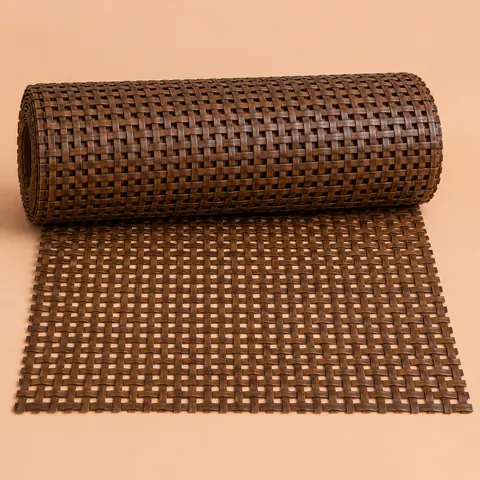
Walnut Square Cane Webbing, Dark Stained Rattan Radio Weave, 18 in
Square weave rattan cane webbing stained a deep walnut brown, for dark wood frames and mid-century furniture. 18 in wide, 3.3 or 5 ft long.
From $38.99 · 2 options
-
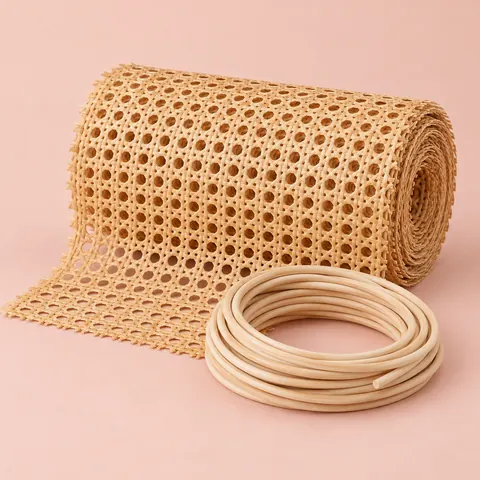
Cane Webbing and Spline Bundle, 6.6 ft Roll with #8 Reed Spline
A 6.6 ft roll of open weave natural cane webbing plus 6.6 ft of #8 reed spline for 3/16 in grooves. Choose a 16, 20 or 24 in wide roll.
From $29.99 · 3 options
-
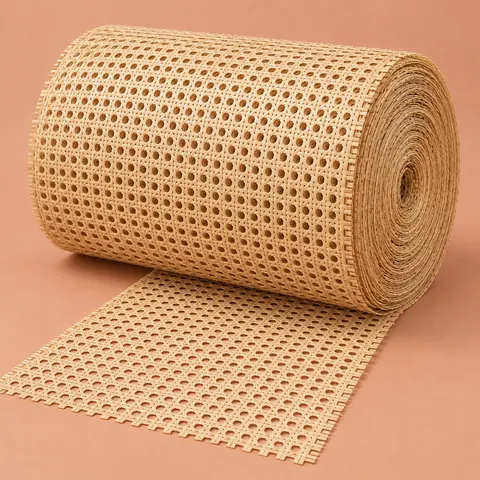
Cane Webbing Trade Roll, Open Weave Natural Rattan, 50 or 100 ft
Open weave natural rattan cane webbing on long trade rolls, 50 or 100 ft, 18 to 36 in wide, for furniture makers, upholsterers and repair shops.
From $224.99 · 6 options
-
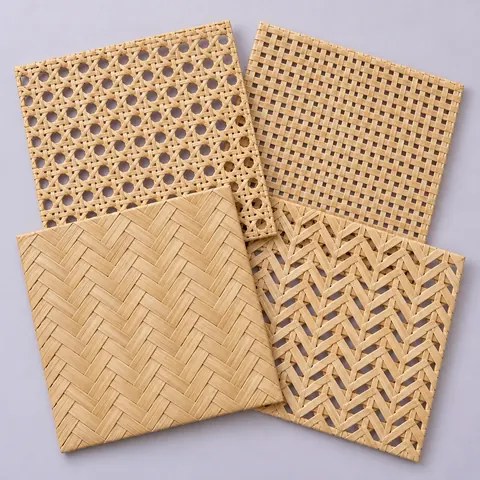
Cane Webbing Sample Pack, 4 Natural Weaves, 12 x 12 in Each
Four 12 x 12 in pieces of natural rattan cane webbing: open, square, herringbone and diamond weave. See them on your furniture before buying a roll.
$19.99
Questions
Which weave works best for a chair seat?
Open weave is the traditional choice for pressed seats and backs, and square weave goes in the same way, with spline in a groove. Herringbone is usually glued and stapled behind flat frames such as cabinet doors rather than pressed into a seat.
Can I stain or paint cane webbing?
You can, but the glossy face of rattan cane takes stain unevenly, so try it on an offcut first. If you want a dark look without staining, the walnut-tone square weave comes already stained.
Why are there loose strands at the ends of my roll?
A few loose strands at the cut ends are normal, because the roll is cut from a longer length. Those ends sit outside the groove or behind the frame and are trimmed off when you install.
Will a second roll match the first one?
Not exactly. Natural cane varies in color and grain from roll to roll, so order the whole project at once. For big jobs, a 50 or 100 ft trade roll lets you cut everything from one roll.