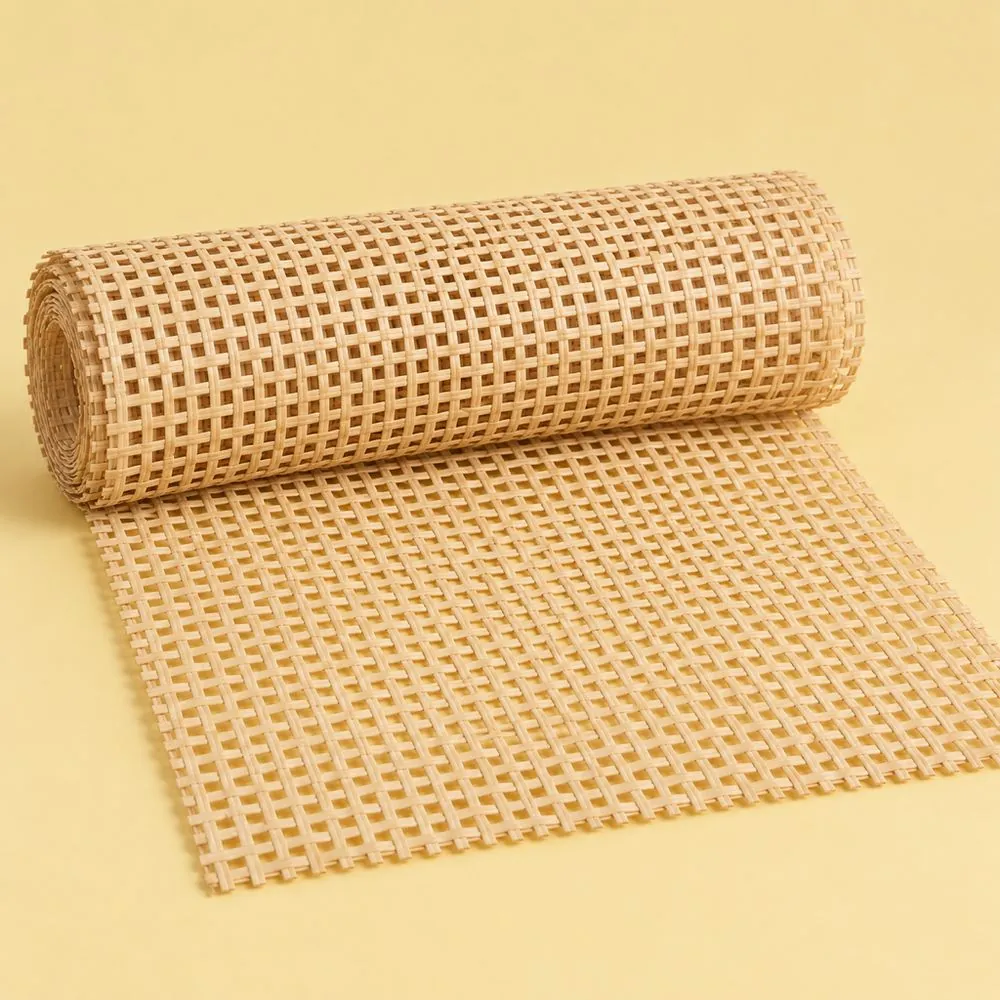
Photos illustrate the product type.
Square Cane Webbing Roll (Radio Weave), Natural Rattan, 14 to 24 in
Square weave cane webbing, also called radio weave: natural rattan strands crossed at right angles in a neat grid, for doors and wall panels.
Every roll is measured before it ships. Natural material: color and grain vary. Soak about 30 minutes before use.
Square weave uses the same kind of flat strands of natural rattan cane as classic open weave, but here they cross only at right angles. The result is a neat grid of small square holes, also sold under the name radio weave. Next to the traditional round-holed pattern it looks more graphic and modern, and it is a popular choice for cabinet doors, sideboards and wall panels.
Where it works well:
- Cabinet and sideboard doors, where the grid lines up with the rails and stiles of the frame
- Wall panels, room dividers and the front of a media console
- Chair seats and backs, pressed into a routed groove and locked with spline, just like open weave
Because the pattern is a grid, any twist shows. Before the first staple or wedge goes in, line one strand up with a straight edge of the frame, then work from the middle of each side out toward the corners, checking that the rows stay parallel. Open weave hides a slight angle; square weave turns it into a crooked line that catches the eye.
The material handles like any natural cane. Soak the piece about 30 minutes in warm water so it bends without cracking, keep the shiny side out, and fix it while it is still damp. It tightens as it dries. On a flat door, glue and staple it to the back of the frame and hide the staples under a strip of trim. In a seat, wedge it into the groove and glue in reed spline.
Natural cane changes color a little from roll to roll. For a pair of doors or a run of matching panels, cut every piece from the same roll. Each roll is measured before it ships.
How to choose
Square weave comes in five sizes: 14 in x 3.3 ft, 18 in x 5 ft, and 24 in wide in 3.3, 5 or 10 ft. For a door, take the size of the frame opening and add at least 1 in on every side for stapling. For a seat, add at least 2 in each way to the groove-to-groove opening.
Pick a width that covers the short side of your pieces, then lay the long sides end to end to find the length. Example: a pair of doors with 12 x 20 in openings needs two 14 x 22 in pieces, 44 in of length in all, so the 18 in x 5 ft roll is the one to choose. A long console with three or four doors is easiest to plan on the 24 in x 10 ft roll.
Questions
Is radio weave the same as square weave?
Yes. Both names describe natural cane woven at right angles, with small square holes in a regular grid.
Can I put square weave on a chair seat?
Yes. It installs the same way as open weave: soak it, wedge it into the groove and lock it with reed spline. Open weave gives the traditional look; square weave gives a plainer, more modern seat.
Will people see into my cabinet?
Somewhat. The square holes let light and shapes show through. To hide the contents, choose our closed herringbone weave, or back the cane with a plain fabric.
How do I keep the grid straight?
Work with the cane damp, line one strand up with the edge of the frame, and fix the middle of each side first. Then work toward the corners, checking the rows with a ruler as you go.
You may also need
-

Reed Spline for Chair Caning, 6 ft Coil, Sizes #6.5 to #11
Reed spline that locks pressed cane into a chair seat groove, in nine sizes from #6.5 to #11: #7 fits 1/8 in, #8 fits 3/16 in, #9 fits 1/4 in grooves.
From $7.99 · 9 options
-
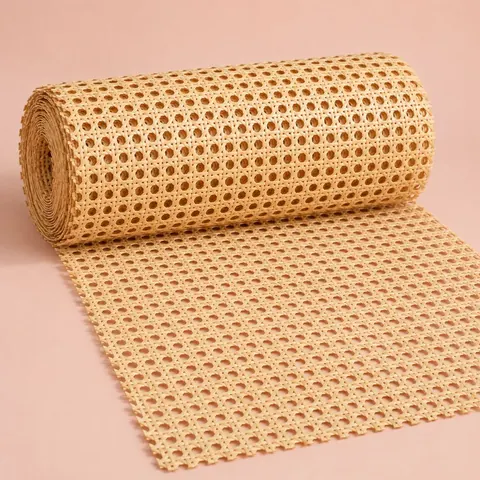
Cane Webbing Roll, Open Weave Natural Rattan, 14 to 36 in Wide
Natural rattan cane webbing in the classic open weave, on rolls 14 to 36 in wide, for chair seats, cabinet doors, headboards and screens.
From $18.99 · 14 options
-

Cabinet Door Caning Kit, 24 x 36 in Cane Sheet, Open or Square Weave
Reface one or two cabinet doors with cane: a 24 x 36 in sheet of open or square weave natural cane, wood glue and pine trim to hide the staples.
From $49.99 · 2 options
-
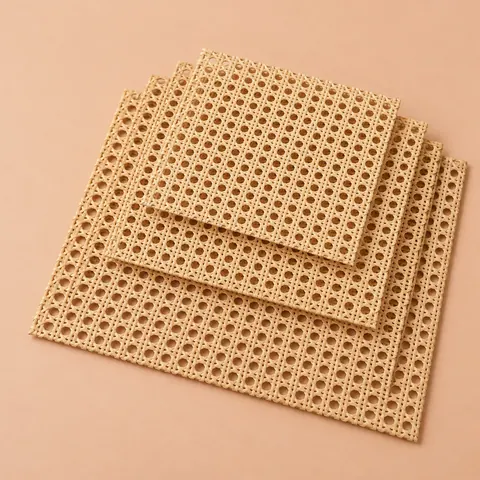
Precut Cane Webbing Sheets, Open Weave, 12 x 12 to 24 x 36 in
Flat-packed sheets of open weave cane webbing in 12 x 12, 18 x 18, 24 x 24 and 24 x 36 in, with no roll curl, for stool seats, cabinet doors and trays.
From $9.99 · 4 options