Sizing
How to measure a spline groove for a cane seat
Measure groove width with a drill bit, calipers or old spline, then the groove length and seat opening, and cut cane webbing to the right size.
Updated
Before you order anything for a pressed cane seat, you need three numbers:
- Groove width, which sets the spline size.
- Groove length, which sets how much spline to buy.
- Seat opening, which sets how big a piece of cane webbing to cut.
All three take about ten minutes once the old seat is out. Here is how to get each one right.
What you need
- A flexible tape measure or a ruler
- A piece of string, or a long strip of paper
- A set of drill bits from 1/8 to 3/8 in, or calipers
- A flashlight
- A pencil and paper to write it all down
Before you measure: clean the groove
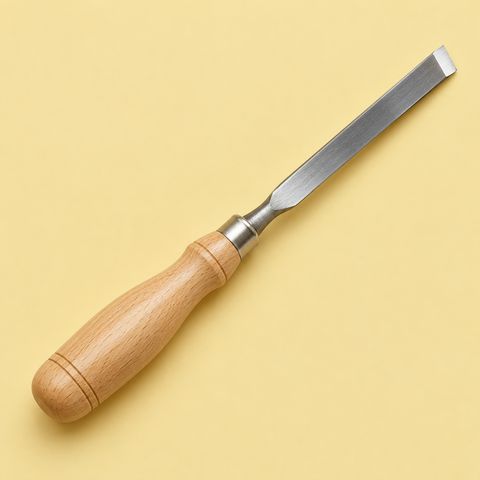
Measure the groove itself, not the old spline. If the old spline is still in place, take it out first. Our step-by-step seat guide shows how to soften the glue and lift it with a caning chisel.
Then scrape out every bit of old glue and cane, down to bare wood, and vacuum the groove. Leftover glue makes a groove read narrower than it is, and you end up with spline that is loose once the groove is clean. If you used water or vinegar to soften the glue, let the groove dry before you measure.
Step 1: Measure the groove width
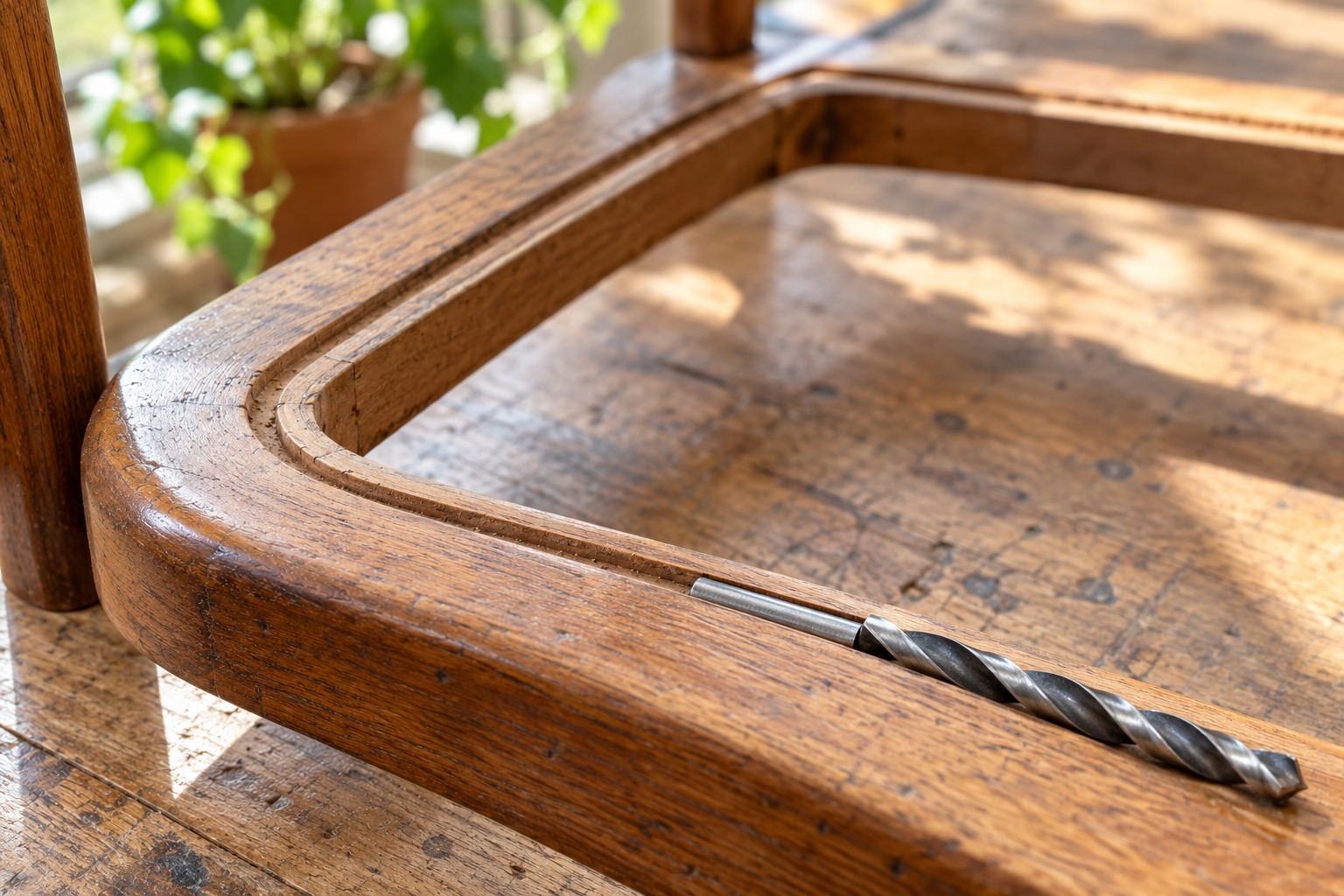
Method A: drill bit shanks
This is the most reliable way without special tools.
- Lay out your drill bits in order of size.
- Hold a bit by the cutting end and slide the smooth shank into the groove.
- Move up through the sizes. The largest bit that slides along the groove without forcing is your groove width.
- Read the size stamped on the shank or on the bit case.
- Repeat at the center of each side: back, front, left and right.
Method B: calipers
- Use the small inside jaws at the top of the calipers.
- Set them into the groove just below the top edge and open them until they touch both walls.
- Read the width in inches or millimeters.
- Repeat at four or more places, avoiding any chipped spots on the edge.
Method C: a piece of old spline
If the groove is damaged or you want a second check, measure a clean piece of old spline across its widest part, near the crown. Treat this as a starting point only. Old spline is usually squashed, swollen with glue or splintered, so it can read a little off. Confirm with a test-fit before you buy in quantity. The number printed on an old spline packet is not reliable either, since numbering varies between suppliers.
Turn your reading into a spline size
| Groove width | Decimal | Approx. mm | Spline |
|---|---|---|---|
| About 3/32 in (narrower than 1/8) | 0.094 in | 2.4 mm | #6.5 |
| 1/8 in | 0.125 in | 3.2 mm | #7 |
| 5/32 in | 0.156 in | 4.0 mm | #7.5 |
| 3/16 in | 0.188 in | 4.8 mm | #8 |
| 7/32 in | 0.219 in | 5.6 mm | #8.5 |
| 1/4 in | 0.250 in | 6.4 mm | #9 |
| 9/32 in | 0.281 in | 7.1 mm | #9.5 |
| 5/16 in | 0.313 in | 7.9 mm | #10 |
| About 3/8 in (wider than 5/16) | 0.375 in | 9.5 mm | #11 |
If your readings differ around the seat, go with the width you found in most places. If a reading falls right between two sizes, test-fit both and start with the smaller one. The reed spline size chart explains the test-fit, and the spline finder does the lookup for you. If you are torn between #7, #8 and #9, the spline sampler set lets you try all three.
Step 2: Measure the groove length
- Press a piece of string into the groove all the way round, following every curve and corner.
- Pinch the string where it meets its starting point.
- Straighten it along a tape measure and read the length.
- Add 6 in for trimming and making the joint.
Example: a groove that measures 58 in around needs 64 in of spline. One 6 ft coil is 72 in, so it covers one average seat with room to spare. If the chair has a caned back as well, measure that groove separately and add 6 in to it too.
Step 3: Measure the seat opening
This tells you how big the cane webbing must be.
- Width: measure side to side from the outer edge of the groove on one side to the outer edge on the other. On a seat that is wider at the front, measure at the widest point.
- Depth: measure front to back from the outer edge of the front groove to the outer edge of the back groove, at the deepest point (usually the middle).
- Round seats: measure the diameter across the outer edges of the groove, in two directions, and use the larger number.
Write it down as width by depth, for example 15 x 14 in.
Step 4: Work out how much cane webbing to cut
Add 2 in to each measurement. That puts the cane 1 in past the groove on every side, which is enough to grip with wedges while you work. If this is your first seat, an extra inch or two each way gives you more to hold and a little room to correct the pattern.
| Seat measured at outer edge of groove | Cut the cane at least | Good fit from our range |
|---|---|---|
| 12 x 12 in | 14 x 14 in | 14 x 14 in kit sheet, or a 14 in wide roll |
| 15 x 14 in | 17 x 16 in | 18 x 18 in kit sheet, or an 18 in wide roll |
| 17 x 16 in | 19 x 18 in | 24 x 24 in kit sheet, or a 24 in wide roll |
| 20 x 18 in | 22 x 20 in | 24 x 24 in kit sheet, or a 24 in wide roll |
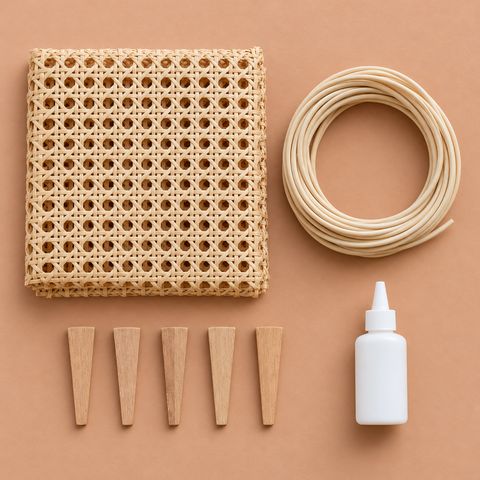
These are example measurements; use your own. The chair seat caning kit comes with a 14 x 14, 18 x 18 or 24 x 24 in sheet, spline in your size, wedges and glue. For several chairs, cut from a roll of open weave cane webbing.
When you cut, line up the edge of the sheet with a straight row of strands so the pattern sits square to the front of the seat. Open weave looks the same turned either way, so the roll width can run side to side or front to back, whichever fits better.
For cabinet doors, headboards and other frames where the cane is stapled behind the frame instead of pressed into a groove, the allowance is different: measure the opening and add 1 in of overlap on every side. Our guide on how much cane webbing you need covers those projects and how to pick a roll.
Common measuring mistakes
- Measuring to the inside edge of the groove. The cane comes out too small to reach the bottom of the groove. Always use the outer edge.
- Measuring over old glue. The groove reads narrow, and the spline you buy is loose in the clean groove.
- Measuring in only one place. Hand-cut and worn grooves vary. Check all four sides.
- Reading the cutting end of a drill bit. The flutes are not the true diameter. Use the smooth shank.
- Trusting an old spline packet. Numbers vary between suppliers. Go by the groove width.
- Forgetting the back. A caned back has its own groove and needs its own spline and cane.
Once you have your three numbers, you are ready to replace the seat. Browse reed spline and cane webbing when you are ready to order.