Sizing
Reed spline size chart: which spline fits your groove
Match reed spline sizes #6.5 to #11 to your groove width, test-fit before you glue, and work out how many feet of spline to buy for a seat.
Updated
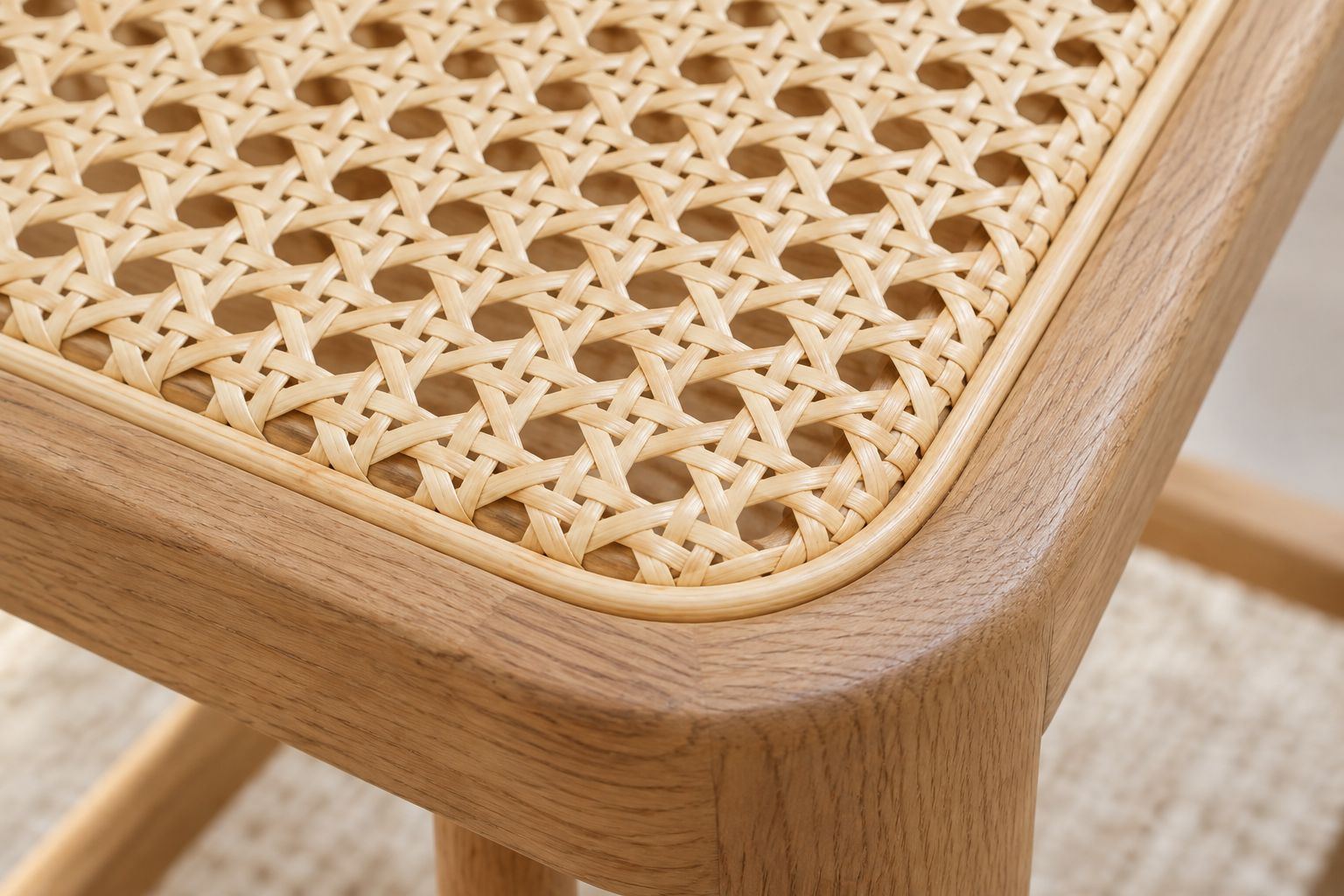
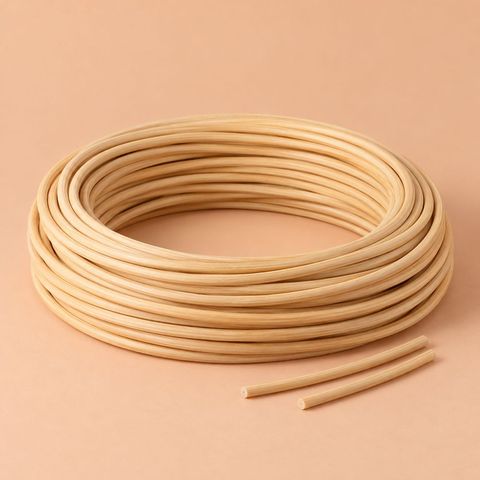
Reed spline is the narrow rattan strip that locks pressed cane into the groove around a chair seat. It has a rounded top, called the crown, and it tapers toward the bottom. When you tap it in, it wedges the cane tight against the walls of the groove. The glue in the groove holds the spline, and the spline holds the cane.
Spline comes in numbered sizes, and only one thing decides the size: the width of your groove. Get it right and the spline goes in with firm, even taps and sits flush with the seat. Get it wrong and it either rattles loose or splits the groove edge as you drive it.
Reed spline size chart
Our spline is sized to the groove width as shown below. If you measure with calipers in millimeters, use the mm column.
| Spline size | Groove width | Decimal | Approx. mm |
|---|---|---|---|
| #6.5 | Narrower than 1/8 in (about 3/32 in) | 0.094 in | 2.4 mm |
| #7 | 1/8 in | 0.125 in | 3.2 mm |
| #7.5 | 5/32 in | 0.156 in | 4.0 mm |
| #8 | 3/16 in | 0.188 in | 4.8 mm |
| #8.5 | 7/32 in | 0.219 in | 5.6 mm |
| #9 | 1/4 in | 0.250 in | 6.4 mm |
| #9.5 | 9/32 in | 0.281 in | 7.1 mm |
| #10 | 5/16 in | 0.313 in | 7.9 mm |
| #11 | Wider than 5/16 in (about 3/8 in) | 0.375 in | 9.5 mm |
Sizes #7, #8 and #9 cover most chair seats. The half sizes are for grooves that land between the common sizes, which happens often on older chairs.
One caution. Spline numbers are not fully standard from one supplier to the next. Some number their spline by the width of the strip itself rather than the groove, so the same number can be 1/32 in off. Always buy by the groove width, not by the number on an old packet. For a quick answer, enter your measurement in the spline finder.
Measure the groove first
You need a clean groove to get a true reading. Old glue and bits of cane left in the bottom make a groove read narrower than it is.
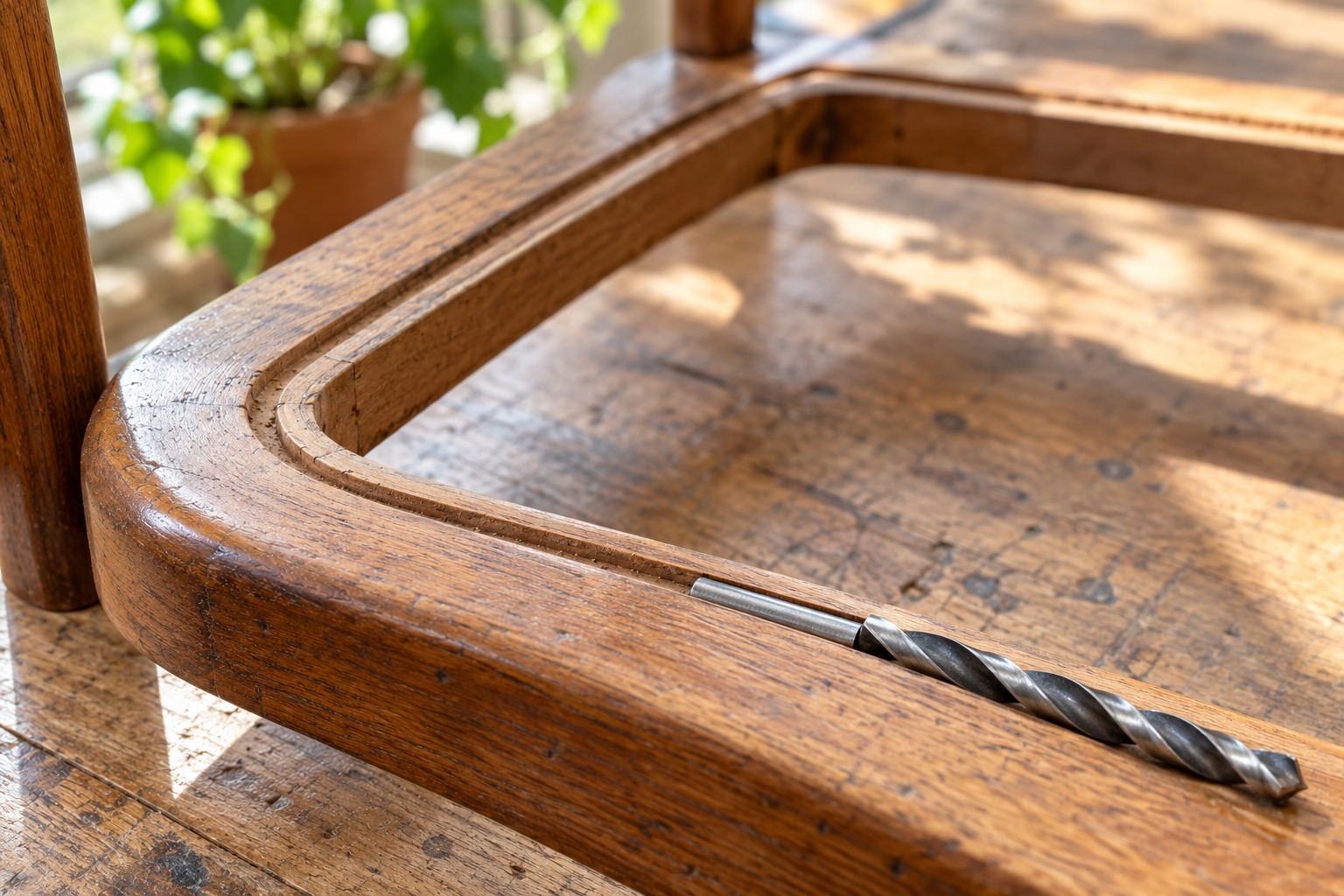
The easiest home method is a set of drill bits. Slide the smooth shank end, not the cutting end, into the groove. The largest bit that slides along without forcing is your groove width. Calipers work too: open the small inside jaws in the groove and read the width. Check at least four places, one on each side of the seat.
Our guide to measuring a spline groove covers drill bits, calipers and old spline in detail, plus how to measure the seat for cane webbing.
How to test-fit spline before you glue
A measurement gets you close. A test-fit tells you for sure. It takes ten minutes and can save a seat.
- Clean out a few inches of groove on the back rail, down to bare wood.
- Cut a 3 to 4 in piece of each size you are considering. Soak the pieces in warm water for 10 to 15 minutes, as you would for the real job.
- Lay a scrap of cane webbing over the clean groove and press it to the bottom with a wedge. The finished seat has cane in the groove under the spline, so test with cane in place.
- Set a test piece over the groove, crown up, and tap it in with a wedge and a mallet.
- Read the fit with the table below, then pull the piece out. No glue yet.
| What you feel | What it means | What to do |
|---|---|---|
| Starts with finger pressure, needs firm taps to sit flush | Right size | Buy this size |
| Drops in by hand, rattles, or sits below the surface | Too small | Go up a half size |
| Will not start, rides on top, or the groove edges bulge | Too large | Go down a half size |
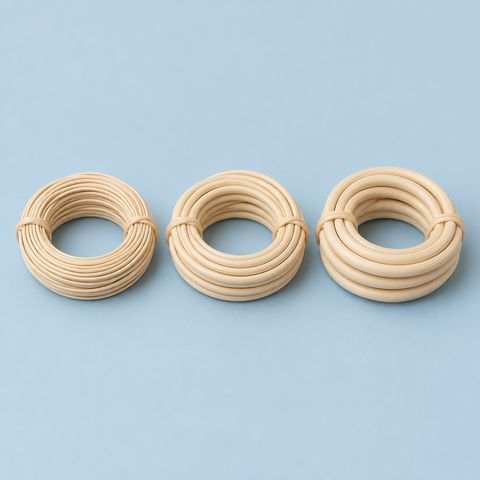
If you are not sure which common size you have, the spline sampler set gives you 6 ft each of #7, #8 and #9. Test all three, use the one that fits, and keep the other two for the next chair.
When the groove is between sizes or uneven
- Between two sizes: use the half size. If you only have whole sizes, try the smaller one first.
- A little too tight: a spline that is just slightly wide can be shaved along its sides with a sharp knife or a block plane. Take off a little at a time and test again.
- Wider in a few spots: older grooves are sometimes chewed wider where the last spline was pried out. Size for the width along most of the groove, not the damaged spots.
- Packed with old glue: clean it before you measure. Never buy a smaller spline to suit a dirty groove; it will be loose once the groove is clean.
How much spline to buy
Spline goes in as one continuous piece around the seat, so you need the full groove length plus spare.
- Lay a piece of string in the groove all the way round, pressing it into the corners.
- Mark where it meets its starting point, straighten it and measure it.
- Add 6 in for trimming the ends and making the joint at the back.
For example, a seat whose groove runs about 15 by 14 in measures roughly 58 in around. Add 6 in and you need 64 in, so one 6 ft coil (72 in) is enough.
| What you are doing | What to buy |
|---|---|
| One average chair seat | One 6 ft coil in your size |
| Seat and back on the same chair | Measure each groove, add 6 in to each, and total them |
| Not sure of the size | The spline sampler set (#7, #8, #9) |
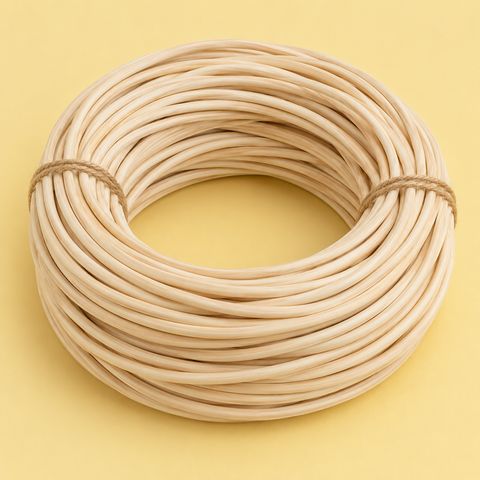
| A set of chairs or shop work | A 65 ft bulk coil, about ten average seats |
| New seat with a 3/16 in groove | The cane webbing and spline bundle, which comes with #8 |
Soak only the length you are about to use. Keep the rest dry and loosely coiled.
Tools that match your spline size
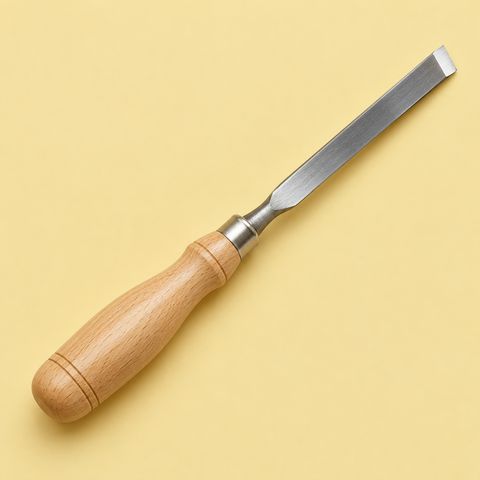
- Caning chisel: to lift out old spline, use a blade that matches your groove or one size smaller. The 1/8 in blade suits #7 grooves; the 3/16 in blade suits #8 and larger. See the caning chisel.
- Router bit for new frames: if you are building a frame, a slot cutter router bit cuts a 1/8, 3/16 or 1/4 in groove for #7, #8 or #9 spline.
- Glue: a narrow-tip bottle of wood glue lays a thin bead right into the groove.
Spline tips from the bench
- Glue goes in the groove first, then the spline. Wipe off any squeeze-out with a damp cloth while it is still wet.
- Tap the spline in with a hardwood wedge or a wood block under the mallet, not a bare hammer, so you do not dent the crown.
- Start and finish at the center of the back rail, where the joint shows least. Cut the two ends at matching angles so they meet tight.
- Do not swap in round reed or rattan core. They are round, not wedge-shaped, and will not lock the cane.
When you are ready for the whole job, follow our step-by-step guide to replacing a pressed cane seat, or browse all reed spline.