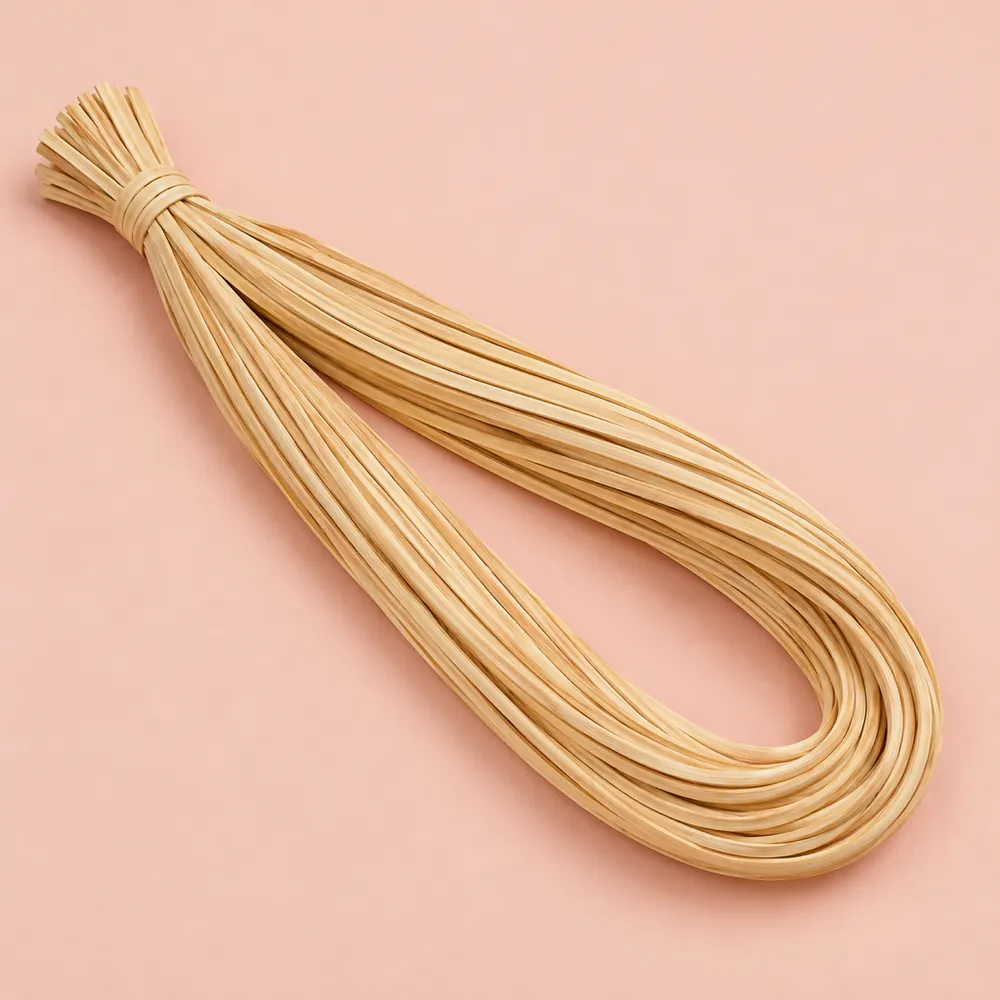
Photos illustrate the product type.
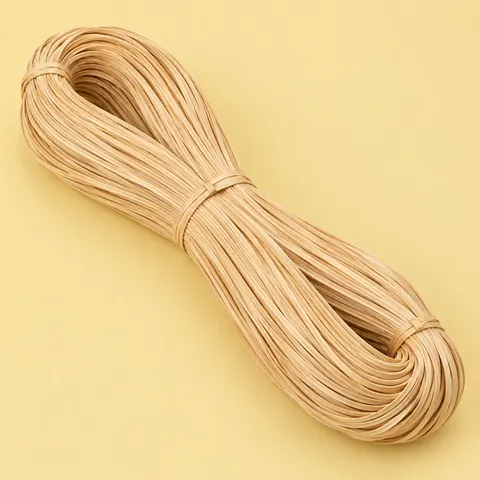
Strand Chair Cane, 270 ft Hank with Binder, 2 mm to 3.5 mm
Natural strand chair cane for hand caning a seat through drilled holes: a 270 ft hank, about one seat, with 4 mm binder. Six sizes, 2 to 3.5 mm.
Strand cane, also called chair cane, is the glossy outer peel of the rattan palm, split into long, flat strands. It is the material for chairs that have a row of drilled holes around the seat instead of a groove. You weave it by hand in the traditional seven-step pattern: two layers front to back, two side to side, two diagonals, and a binder around the edge to finish.
A 270 ft hank is about enough for one average seat. Wrapped inside is one strand of 4 mm binder cane, the wider strip that lies over the holes when the weaving is done and is tied down with a loop of strand cane.
A few habits make the work go well:
- Soak a few strands at a time in warm water for 10 to 15 minutes, and keep the strand you are weaving damp. Dry cane splits.
- Weave shiny side up. Pull a strand through your fingers: it runs smoothly one way and catches on the nodes the other way. Weave in the smooth direction.
- Hold loose ends with caning pegs, and don't pull the first layers drum-tight. The diagonals tighten the seat, and the cane shrinks a little more as it dries.
Size follows the holes in your chair, not the size of the seat. Measure the hole diameter and the spacing from the center of one hole to the center of the next, then use this chart:
- Superfine 2 mm: 1/8 in holes, about 3/8 to 7/16 in apart
- Fine-fine 2.25 mm: 3/16 in holes, about 1/2 in apart
- Fine 2.5 mm: 3/16 in holes, about 9/16 to 5/8 in apart
- Narrow medium 2.75 mm: 1/4 in holes, about 5/8 to 11/16 in apart
- Medium 3 mm: 1/4 in holes, about 3/4 in apart
- Common 3.5 mm: 5/16 in holes, about 7/8 in apart
How to choose
Measure spacing over several holes, not just two: measure from the center of the first hole to the center of the fifth or sixth, then divide by the number of gaps. Hand-drilled holes are rarely even, and the average is what counts. Then check the hole diameter with a drill bit shank or a ruler.
If your holes are small for their spacing, go one size finer. Each hole carries several passes of cane plus the binder loop, and a crowded hole is hard to finish. If you still have a piece of the old cane, measure its width in mm and match it. Torn between two sizes? Order the finer one; it is easier to work through tight holes.
Questions
My chair has a groove, not holes. Is this the right cane?
No. A seat with a routed groove takes pressed cane webbing held in with reed spline. Strand cane is for seats with a row of drilled holes.
Can I size it from my old cane instead of the holes?
Yes, if you have a clean piece. Measure the width of one strand in mm and pick the closest size. Check it against the hole chart too, since an earlier repair may have used the wrong size.
Is one hank enough?
270 ft is about one average seat. A large seat, close-set holes or a seat and back together use more; for those, or for a set of chairs, choose the 1000 ft hank.
When can I sit on the new seat?
Only when the cane is completely dry. Wet cane is soft and gives; as it dries it tightens and hardens into a firm seat.
Should I stain or finish the cane?
Most caners leave it natural, and it darkens gently with age. The glossy surface takes stain unevenly, so if you want color, test on a spare strand first.
You may also need
-
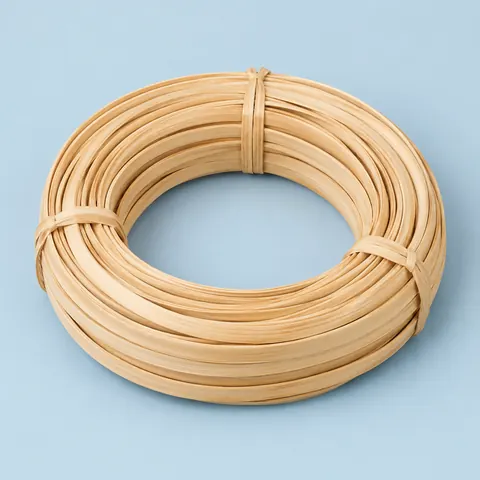
Binder Cane, 500 ft Hank, 4, 5 or 6 mm Wide
Wide, flat natural binder cane in 500 ft hanks, 4, 5 or 6 mm, to finish the edge of hand-caned seats, wrap joints and handles, and lash basket rims.
From $49.99 · 3 options
-
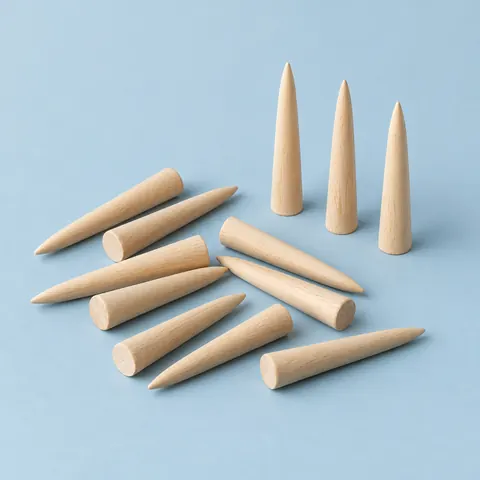
Caning Pegs for Hand Caning, Tapered Wood, 12 or 50 Pack
Tapered wooden pegs that hold strand cane tight in the holes while you hand-cane a seat, and later plug holes under the binder; packs of 12 or 50.
From $5.99 · 2 options
-
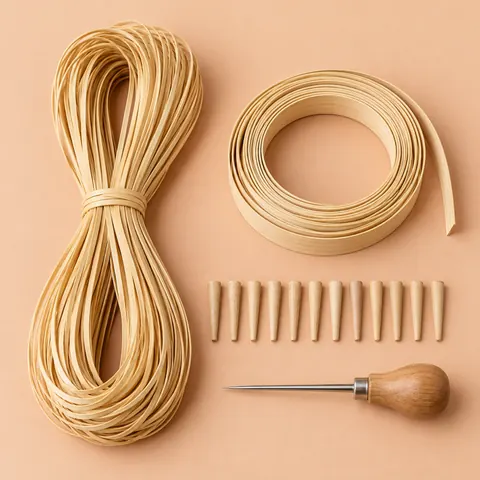
Hand Caning Kit for Hole-to-Hole Chair Seats, 270 ft Strand Cane
Hand-cane a seat through its drilled holes: a 270 ft hank of strand cane, 4 mm binder cane, 12 wooden pegs and an awl, in fine, medium or common.
$27.99 · 3 options
-
Strand Chair Cane, 1000 ft Hank for 3 to 4 Seats, 2 mm to 3.5 mm
A 1000 ft hank of natural strand chair cane with four strands of 4 mm binder, enough for about three to four hand-caned seats. Six sizes, 2 to 3.5 mm.
From $29.99 · 6 options