Care
Cane furniture care: cleaning, tightening and small repairs
How to care for cane chairs and panels: dusting, humidity, the damp wipe from underneath, tightening a sagging seat, small breaks and which finish to use.
Updated
Natural cane is the glossy outer skin of the rattan palm. That skin is hard and smooth on top, which makes cane tough for its weight. It is also a plant fiber that moves with moisture: it swells a little when damp and shrinks as it dries. Almost everything about caring for cane follows from that.
The short version
- Dust it often with a soft brush.
- Keep it away from hot, dry air and direct sun.
- Now and then, wipe the underside with a damp cloth.
- Do not soak it, stand on it, or let pets scratch it.
- Fix a sagging seat with a little water before it breaks.
Dusting and cleaning
Dust settles in the holes of the weave. Use a soft paintbrush, or the brush attachment of a vacuum on low suction, and work along the strands. A stiff brush can lift strand edges.
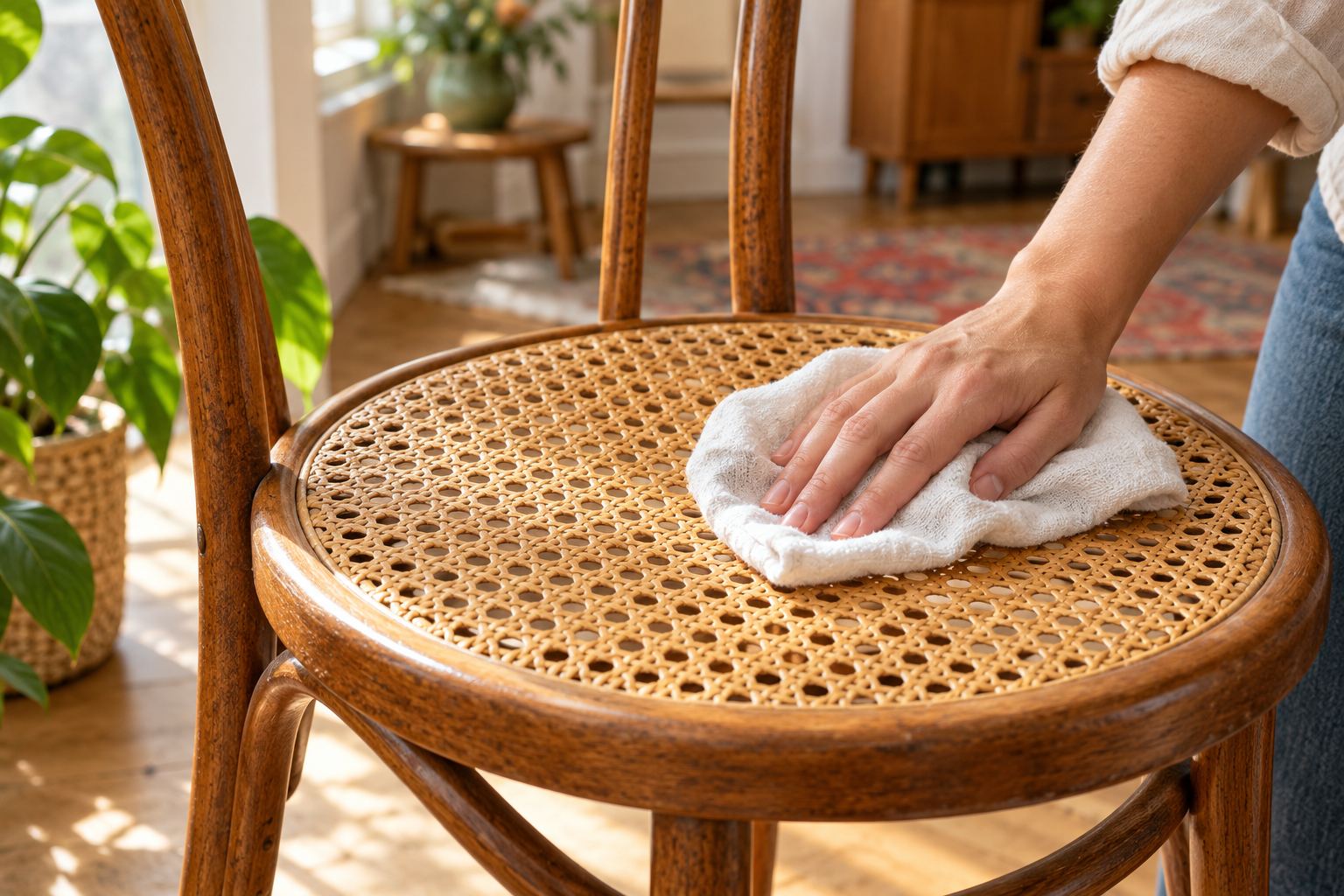
For grime, mix a few drops of mild dish soap into warm water. Wring a soft cloth until it is barely damp, wipe along the weave, then wipe again with clean water and let it air dry. Do not flood the cane, and keep water off the wood finish as much as you can. Skip bleach, ammonia and household sprays.
Humidity: dry air is the real enemy
Cane stays flexible because it holds a little moisture. In a hot, dry room, next to a heat vent, radiator, wood stove or sunny window, it slowly dries out and turns brittle. Brittle cane cracks when someone sits down hard.
- Keep caned pieces away from heat sources.
- In winter, or in a dry climate, a humidifier in the room helps both the cane and the wood joints.
- Do not go to the other extreme. A bathroom without a fan or a covered porch keeps natural cane damp, and constant damp lets it sag and can grow mildew. For those spots, synthetic PE cane is the better material; see outdoor PE cane vs natural cane.
The damp wipe from underneath
This is the one routine that keeps a cane seat springy. Turn the chair over and wipe the underside of the cane with a cloth or sponge dampened in warm water. The underside is the dull, unglazed side, and it takes up moisture more readily than the glossy top. Let the chair dry upright, away from heat, before anyone sits on it.
Do it every so often through the year, and more during the heating season. Wipe; do not soak.
Tightening a sagging seat
A seat that has gone slack but has no broken strands can often be tightened with water.
- Turn the chair over.
- Wet the underside of the cane with warm water from a sponge or spray bottle, or lay a damp towel over it for a while. Mist the top lightly as well.
- Let it dry slowly overnight at room temperature. No hair dryer, no heater, no sun.
- Wait until it is completely dry before anyone sits on it. Damp cane stretches.
As the cane dries, it shrinks back and pulls tight. This works best on seats that are stretched, not torn, and it works a few times, not forever: each cycle leaves old cane a little less elastic. If a seat sags again within weeks, it is ready to be replaced.
It will not work on cane sealed under lacquer, varnish or polyurethane, because the finish keeps the water out.
Small breaks
What you can do depends on how the seat was made.
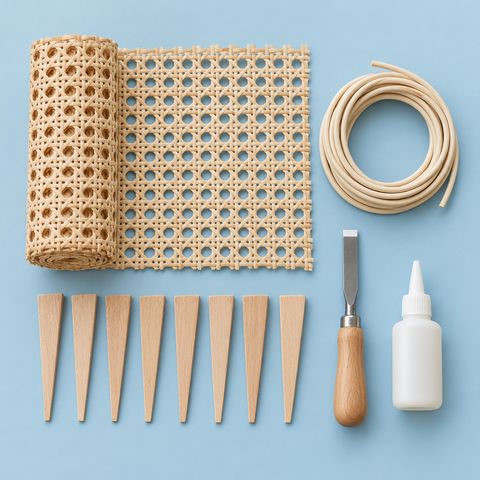
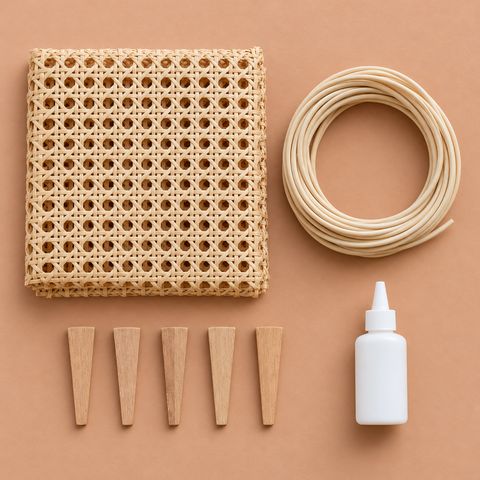
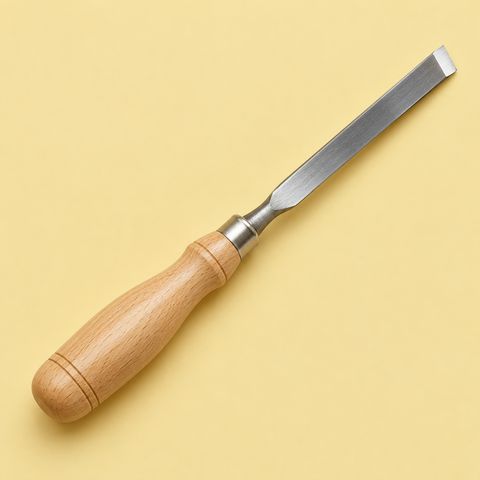
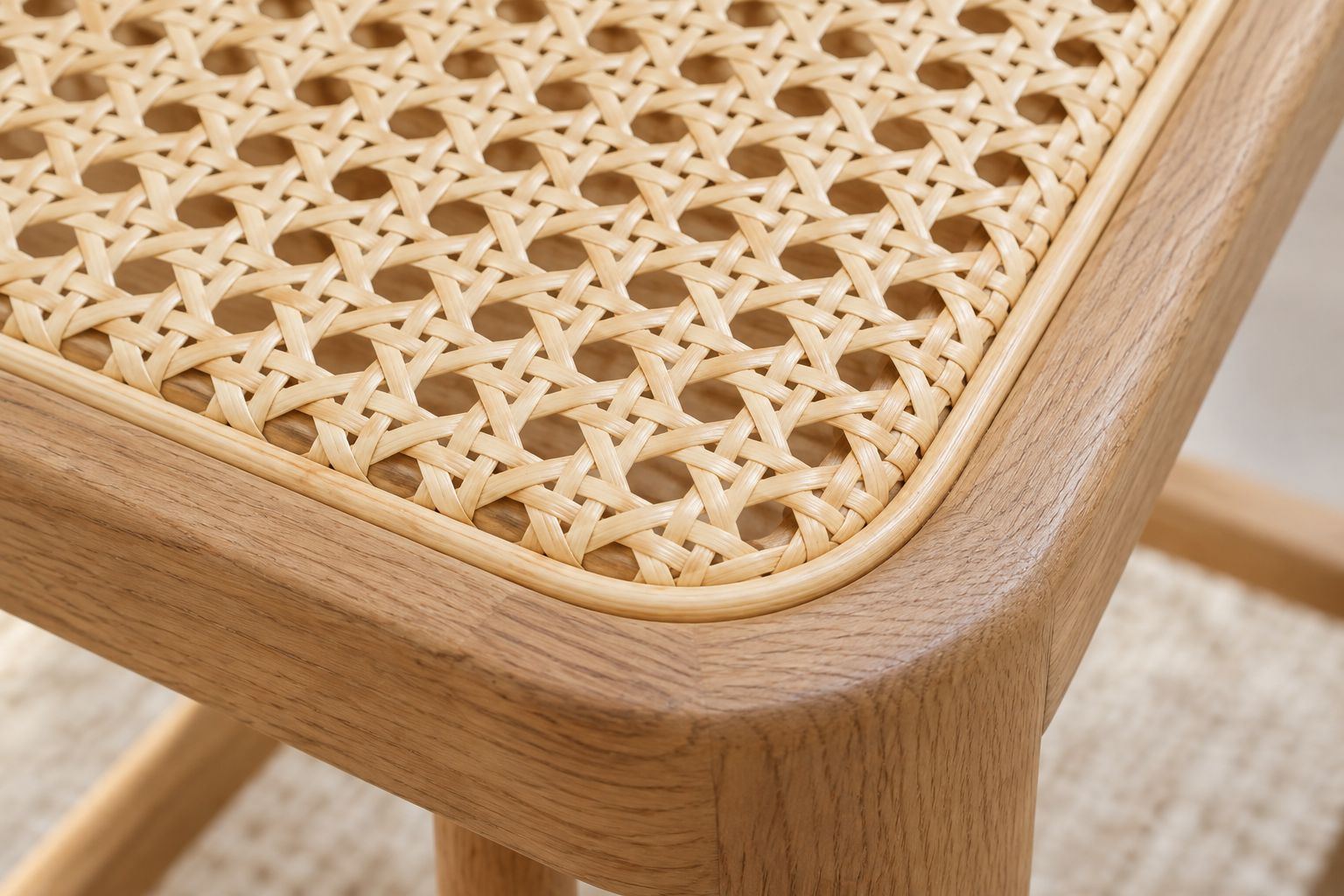
Pressed cane (a woven sheet held in a groove with spline). One or two broken strands can be glued down from underneath with a dot of wood glue so they stop snagging clothes. That is a holding repair. Once a hole opens, the sheet keeps tearing around it, and the fix is a new sheet. That is an afternoon’s work: see how to replace a pressed cane seat. Our rattan repair kit covers one large or two small seats, and a caning chisel lifts the old spline without widening the groove.
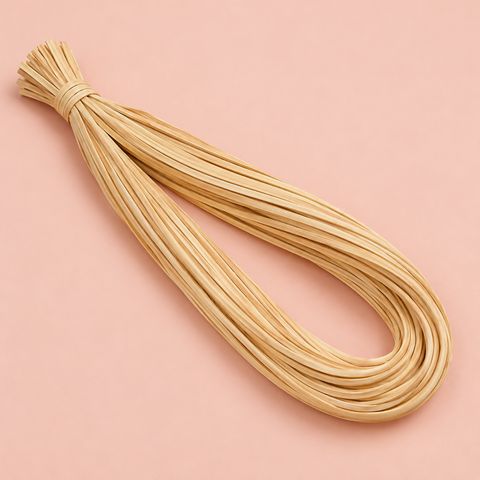
Hand-caned seats (cane woven through holes). A few broken strands can be replaced by weaving a new strand along the same path and tying it off underneath. You need strand cane of the same width and some patience; hand caning a chair seat explains the pattern. If many strands are broken, or the binder around the edge has come loose in several places, re-cane the whole seat.
Cabinet doors and headboards. A tear in a stapled panel is easiest to fix by replacing the panel. Pry off the trim, pull the staples and put in a new sheet the same way; see how to cane a cabinet door.
Should you finish cane?
Cane was traditionally left unfinished so it could take up moisture and stay flexible, and many restorers still prefer it that way. If you want more protection or a deeper color, here is how the options compare.
| Finish | Good | Not so good |
|---|---|---|
| None | Stays flexible; can be tightened with water; nothing to wear off | Shows dirt and stains more readily |
| Oil, very light | Deepens the color a little | The glossy surface takes up little oil; extra stays on top and gathers dust |
| Shellac, thinned | Thin, easy to wipe or brush on, easy to renew; adds a warm tone | Water and alcohol spills can leave white marks; wears on a seat and needs recoating |
| Lacquer, varnish or polyurethane | Best resistance to spills and stains | Stiffens the cane; can crack or flake where it flexes; seals out moisture, so a sagging seat cannot be tightened with water; hard to strip |
If you do finish, use one thin coat of thinned shellac or a well-thinned clear finish on the top only. Leave the underside bare so you can still dampen it. Try it on a hidden corner first, because any finish darkens cane.
Pets and sun
Pets. Cats love cane. Claws hook under the strands and pull them loose, and a few weeks of scratching can open a hole in a seat. Dogs chew the binder and the edges. Use a seat cushion, push chairs under the table when not in use, and give the cat a better scratching post nearby. Cane doors at floor level tempt claws too; a closed herringbone weave gives them less to catch.
Sun. Direct sun dries cane out, and over time it bleaches some areas and darkens others, so a chair by a sunny window can end up two-toned. Cane also darkens slowly with age anyway. Turn pieces around now and then, use sheer curtains, and keep caned furniture out of all-day sun.
A few more don’ts
- Do not stand or kneel on a cane seat. All that weight on a small area breaks strands.
- Do not lift or drag a chair by its cane back.
- Do not sit on a seat that is still damp from cleaning or tightening.
- Do not set hot pots or wet glasses directly on cane tabletops or trays.