How-to
How to repair outdoor resin wicker furniture
Fix broken resin (PE) wicker on patio furniture: match strip width and color, cut out broken strands, weave in new strip, glue and hide the ends.
Updated

Most outdoor wicker is not rattan at all. It is a synthetic strip, usually polyethylene (PE), often sold as resin wicker, woven over an aluminum or steel frame. When a strand breaks, it unravels a little more every time someone sits down, until a corner or an arm is bare. The fix is to weave in new strip along the same path the original took.
First, make sure it is PE
Our repair strip is for synthetic wicker, not natural rattan or cane. To tell them apart:
- Look at a broken end. PE breaks clean, like plastic, with the same color all the way through. Natural rattan and reed look fibrous and splintery inside.
- PE strips are very even in width, usually flat or half-round, often with a molded grain or a two-tone color.
- Synthetic wicker is woven over a metal frame you can often see through gaps in the weave.
For natural rattan and wicker, look at basket reed instead.
Match width, shape and color
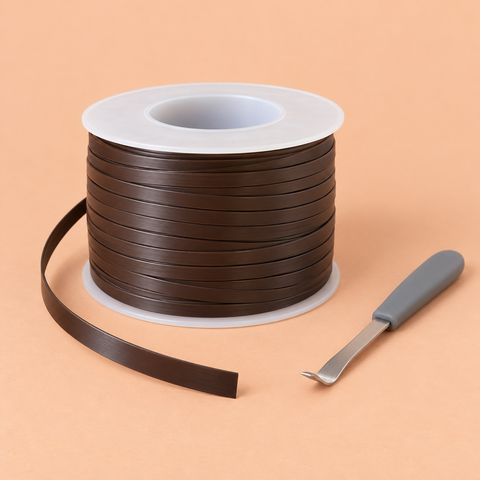
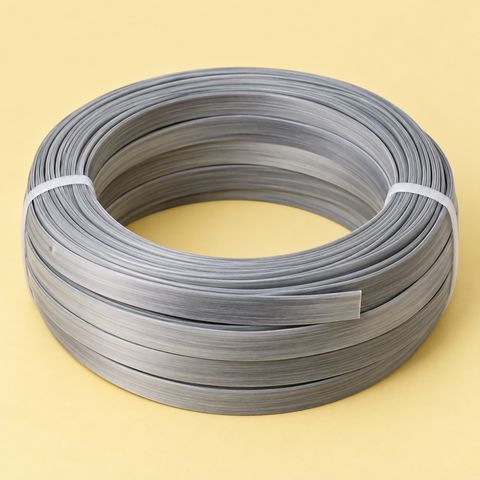
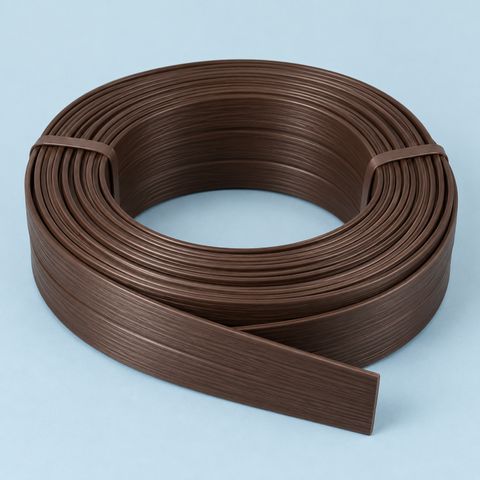
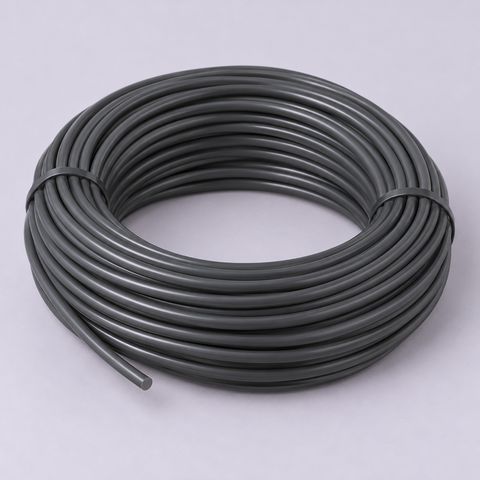
- Width. Measure an unbroken strand in mm with a ruler or calipers. Our flat PE repair strip is 8.5 mm wide (about 11/32 in). The wide strip is 12 mm (about 15/32 in), for chunky modern weaves and full re-wraps. The round strand is 5 mm across (about 3/16 in), for round-weave pieces, wrapped legs and lashings. If you cannot match exactly, a strip slightly narrower than the original shows less than one that is wider.
- Shape. Flat, half-round or round: match it. A flat strip in a round weave stands out from across the yard.
- Color. Outdoor wicker fades, so compare with the piece itself, outdoors in daylight, not with a photo of it new. The strip comes in dark brown, gradient grey (two-tone), light wood and black. A daylight photo of your chair next to the color choices helps. If the match is close but not exact, put the repair where it shows least, underneath or at the back, or replace a whole row instead of a single strand.
How much strip
Most seasonal touch-ups, such as a corner, an arm or a split seat edge, need 50 to 120 ft. The 8.5 mm strip comes in 120 and 230 ft lengths. A full seat re-wrap takes much more; see the end of this guide.
Tools
- Replacement strip
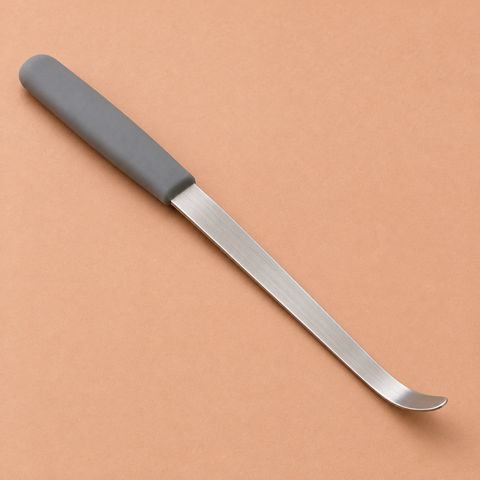
- A wicker weaving and prying tool: flat steel with a slim curved tip for lifting tight strands
- Flush side cutters or sharp scissors
- Needle-nose pliers
- A flexible, waterproof clear adhesive with a fine tip
- Clothespins or small spring clamps
- Mild soap, water and a brush
The outdoor wicker repair kit has 230 ft of 8.5 mm strip and the steel tool together.
Step by step
1. Clean and look
Wash the area with mild soap and water and let it dry. Dirt hides cracks and keeps glue from holding. Then take a close photo of the weave around the damage, such as over one, under one, or over two, under two. You will want it later.
2. Cut out the broken strands
Follow each broken strand in both directions to where it is still sound. Cut it there, at a point where the cut end will sit under a crossing strand. Pull the broken piece out with pliers. Work one strand at a time where you can: leaving its neighbors in place keeps the pattern easy to follow.
3. Warm the strip
PE is stiff in the cold. On a cool day, leave the coil in the sun or in a warm room for a while before you start. Warm strip bends around frame tubes and corners more easily and lies flatter.
4. Weave in the new strip
- Cut a length a few inches longer than the gap.
- At one end of the gap, slide the new strip under the crossing strand that covers the old cut end, so old and new overlap a little underneath it.
- Follow the original path exactly: over where it went over, under where it went under. Where strands are tight, slip the tip of the prying tool under the crossing strand, lift, and push the new strip through alongside the tool.
- Pull it snug as you go but do not stretch it. PE does not shrink or tighten afterward, so the tension you set now is the tension it keeps.
- Where the strip wraps a frame tube, keep it flat and pressed tight against the neighboring rows.
- At the far end, overlap the old strand again under a crossing strand and cut.
When several strands next to each other are broken, stagger the joins so they do not line up in a visible row.
5. Glue and hide the ends
On polyethylene, glue is a helper, not the main hold. PE is slick, and most glues do not bond to it well. What really holds a repair is the end being trapped under a crossing strand.
Lift the crossing strand, put a small dab of flexible adhesive on the overlapping ends, press them down and hold them with a clothespin until the glue sets. Wipe off any glue that shows. Avoid super glue: it is brittle and cracks loose as the wicker flexes. Do all the strands running one direction first, let the glue set, then do the other direction.
On the underside, you can also anchor the start and end of a long new strip with a small zip tie around the frame tube, trimmed flush and out of sight.
Arms and wrapped legs
Arms and leg wraps take the most knocks. If a wrap has come loose, unwind it back to sound strip, then wrap new strip tight against the old turns, starting with the end tucked under the first few turns so they lock it in place. Finish by tucking the last end under the final turns and gluing it. Round-strand wraps take the 5 mm round strand.
When to re-wrap the whole seat
Patching makes sense when most of the strip is sound and the damage is in one area. Re-wrap the seat when:
- The strip cracks wherever you bend it, or looks chalky and faded all over. Sun has made it brittle, and every patch will soon be surrounded by new breaks.
- Breaks are scattered across the seat rather than in one spot.
- The weave has gone loose and baggy everywhere.
- The frame needs work, such as a cracked weld or a rusted steel tube. Fix the frame first; new weaving over a broken frame does not last.
To re-wrap, photograph and measure the pattern, cut away all the old strip, clean the frame, and treat any rust. Anchor the first strip on the underside, then weave row by row, keeping each row tight against the last. The 12 mm wide strip covers faster on full seats and backs and comes in 197 ft coils in gradient grey or dark brown. To estimate, count the rows, measure one, and multiply, then add extra for wraps and waste. Order it all at once so it matches. If a cushion covers most of the seat, re-wrapping only the seat deck in a close color is a fair compromise.
Keep it going
Rinse off dust and pollen now and then, wash with mild soap, and cover or store the furniture over the winter. Cushions dry faster, and the weave lasts longer, when water can drain away.
For outdoor cabinet doors and screens, synthetic cane webbing is the matching material; outdoor PE cane vs natural cane explains the difference.